When Mary returns to her people carrying the infant Jesus, they confront her with words that have puzzled readers for centuries:
“O sister of Aaron, your father was not a man of evil, nor was your mother unchaste.” — Quran 19:28
Why call Mary “sister of Aaron”?
Aaron lived over a thousand years before Mary. Critics claim this proves the Quran confused Mary the mother of Jesus with Miriam, the sister of Moses and Aaron who lived thirteen centuries earlier.
But what if they have it backwards?
Who Is Actually Speaking?
The first question that dismantles this criticism is the most obvious one: Who is speaking in this verse?
This is not God describing Mary’s lineage. This is not the Quran making a genealogical claim. This verse records the direct speech of hostile accusers confronting an unmarried woman carrying a child.
Notice what they say immediately after: “your father was not a man of evil, nor was your mother unchaste.”
They reference her actual father and mother in the same breath. They clearly know who her real parents are. They’re not claiming she’s literally Aaron’s biological sister from 1,300 years ago. That would be absurd.
They’re using an honorific. They’re invoking a title.
God’s Response
And how does God respond to this accusation?
The infant Jesus speaks from the cradle:
“Indeed, I am the servant of Allah. He has given me the Scripture and made me a prophet.” (19:30)
The entire divine response is the miracle of the speaking child vindicating his mother’s honor.
God does not pause to correct the crowd’s use of “sister of Aaron.” The theological weight falls entirely on the miraculous speech, not on genealogical precision in an accusation.
The Quran quotes what the accusers said. It does not endorse their phrasing as literal genealogy any more than it endorses their implicit charge of adultery.
The Hadith Explanation — What It Actually Says
This question was raised during the Prophet’s lifetime. When Christians from Najran asked about this verse, the answer was recorded in Sahih Muslim:
“They used to name people after their prophets and righteous people who lived before them.”
Read that carefully.
The Prophet said “name people after” — not “refer to people by their ancestry.”
This distinction is critical.
If the Quran were making a genealogical claim about Mary’s tribal descent, it would say “O daughter of Aaron” — just as it says “daughter of Imran” elsewhere in the Quran. That’s how you indicate lineage.
But it says “sister of Aaron.”
Why? Because the Prophet explained this was about naming — giving someone both the name and the title of a righteous predecessor.
How Names Carry Titles
Throughout history, names often bring titles and associations with them.
Think of these examples:
Richard the Lionheart — someone named Richard receives both the name and the honorific “Lionheart” after King Richard I of England.
Isa Ruhullah — Jesus, Spirit of God. Both a name and a divine attribute combined.
Musa Kalimullah — Moses, the one who spoke with God. Name plus honorific.
The hadith describes this same phenomenon: naming someone after the righteous who came before, so completely that they receive both the name and the title that went with it.
Mary received both.
The Original “Sister of Aaron”
The biblical woman behind this title is Miriam, the sister of Moses and Aaron.
In Exodus 15:20 she is introduced:
“Miriam the prophetess, Aaron’s sister, took a timbrel in her hand, and all the women followed her, with timbrels and dancing.”
This is her canonical designation throughout the Hebrew Bible.
Not “daughter of Amram.”
Not “sister of Moses and Aaron” despite both being her brothers.
Not “wife of” anyone — Scripture never names her husband.
Her title is “the sister of Aaron.”
Why emphasize Aaron specifically?
Because Aaron was the high priest of Israel, the one who entered the Holy of Holies. Calling Miriam “sister of Aaron” placed her beside the priestly office and connected her to Israel’s sacred leadership in a way that “sister of Moses” would not have conveyed.
A Title Unique in All of Scripture
Here’s what makes this remarkable.
Search the entire Bible — from Genesis through Revelation — and you will find that no other woman is ever given a primary “sister of” designation as her title.
Not Sarah.
Not Rachel or Leah.
Not Deborah.
Not Esther.
Women are identified as “daughter of,” “wife of,” “mother of” — but never primarily as “sister of.”
Only Miriam receives this construction.
The title “sister of Aaron” stands alone in all of biblical literature. It belongs to one woman. It marks a unique sacred status.
Mary Bears the Same Name
Mary’s name in Arabic is Maryam — the exact same name as Miriam.
The names are identical. In Hebrew: מִרְיָם (Miryam). In Arabic: مريم (Maryam).
According to the hadith, people were named after the righteous who came before them — receiving both name and associated honor.
Mary bears the name of Israel’s great prophetess.
When her accusers say “O sister of Aaron,” they invoke that same sacred title.
Daughter vs. Sister: The Grammatical Signal
If this were about genealogy or tribal descent, the Quran would use “daughter of.”
The Quran itself demonstrates this pattern:
- “Daughter of Imran” (3:35) — indicating Mary’s actual father
- “Son of Mary” (multiple verses) — indicating Jesus’s actual mother
“Daughter of” and “son of” signal biological or tribal lineage.
“Sister of” signals something different — an honorific association, a title carried forward.
The grammar itself tells us this is not a genealogical claim.
Early Christian Tradition Connects Mary to Aaron
This connection did not appear only in Islamic interpretation.
Early Christian thinkers saw the same parallels between Mary and Aaronic symbolism.
Ephrem the Syrian (306-373 CE) wrote about Aaron’s staff that miraculously blossomed:
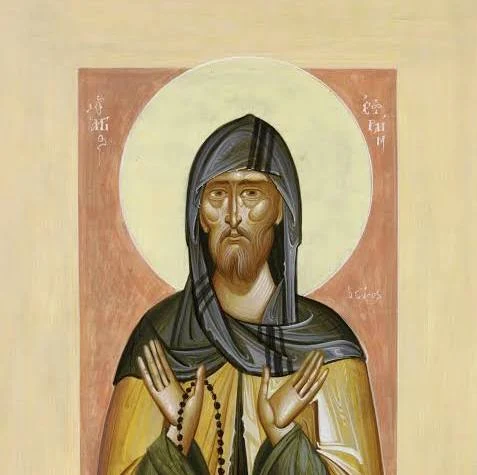
“The rod of Aaron flourished, and the dry wood bore fruit… its symbol today received its explanation: it is the virginal womb that bore.”
The miracle of life from a seemingly dead rod became a symbol for Mary’s virgin birth of Christ.
Aaron’s rod. Mary’s womb. The Church Fathers made this connection explicit.
The Lection of Jeremiah

Perhaps most remarkably, there is a liturgical text from Jerusalem that makes the Aaron-Mary relationship explicit.
The Lection of Jeremiah was read annually at the Church of the Kathisma near Bethlehem — one of the most sacred Marian pilgrimage sites in the ancient Christian world.
The text includes these striking words:
“Nobody will bring forth the hidden Ark from the rock — except the priest Aaron, the brother of Mary.“
Read that again: “Aaron, the brother of Mary.”
Not Miriam. Mary the mother of Jesus.
The document is careful with its nomenclature. When referring to Moses’s sister, it uses “Miriam.” When it writes “Mary,” it means the Theotokos, the God-bearer.
The connection is deliberate, conscious, theological.
This was Christian liturgy in Jerusalem, contemporary with or predating the Quranic revelation.
The Irony of the Accusation
When Mary’s people say “O sister of Aaron,” they intend condemnation.
Their reasoning is clear: a woman associated with the highest priestly purity and the most honored prophetess of Israel should not appear in such a scandalous situation.
They reach for the most sacred standard they know to weaponize it as shame.
But their accusation contains profound irony.
In invoking the title that belonged to the greatest prophetess in Israel’s sacred memory, they speak better than they realize.
They meant to condemn. Instead they proclaimed her place in sacred history.
The Meaning
The phrase is not confusion.
It is a moment of unintended recognition.
The title once spoken over Miriam echoes again over Mary.
And what was meant as accusation becomes honor.
The hadith explains the convention: naming people after the righteous, giving them both name and title.
Scripture establishes the uniqueness: “sister of Aaron” belongs to one woman in all of biblical literature.
Christian tradition confirms the connection: pairing Mary with Aaronic symbols, even calling Aaron “the brother of Mary” in Jerusalem liturgy.
The Quran records it all: in a moment of accusation by hostile speakers, immediately before the infant Jesus vindicates his mother through miraculous speech.
This is not error. This is continuity across revelation.
The accusers reached for the highest priestly honor in Israel to shame Mary. In doing so, they named her correctly.
“Sister of Aaron” is not a mistake. It is a title whose meaning reaches deeper than the accusers understood.