By Dr. Isa Ruhullah Brimah
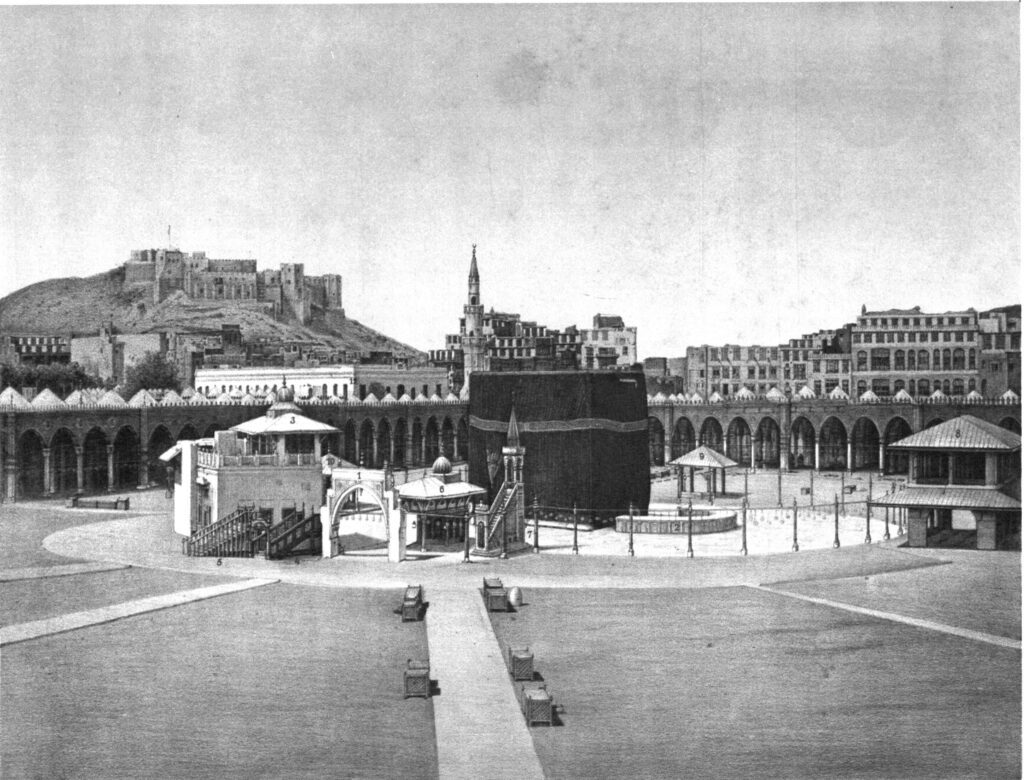
The history of Islamic origins as told in the Quran and preserved in Islamic records — the descent of the Arabs from Ishmael, the Abrahamic foundation of the Kaaba, the antiquity of Makkah’s sanctuary and its rites — is academically well attested from a surprising direction: the writings of non-Muslims who lived and died before Islam existed. Assyrian scribes, Jewish historians, Greek geographers, Byzantine chroniclers, and Christian churchmen, writing across a span of more than a thousand years, in different languages and for different audiences, recorded the essential elements of this account with no stake whatsoever in a religion that had not yet appeared.
Taken together, their testimony establishes that the association of the Arabs with Ishmael, the persistence of Abrahamic customs among them, and the existence of a revered central sanctuary in Arabia were matters of settled knowledge in the ancient world. This article surveys that record, moving from the latest witnesses backward to the earliest.
Sozomen and the Christian Testimony of the Fifth Century
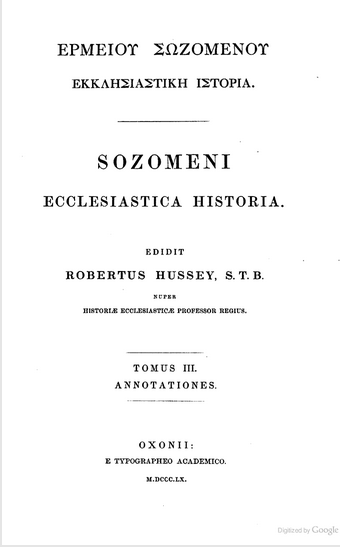
The most substantial pre-Islamic account comes from Sozomen, a church historian writing in the 440s CE — roughly two centuries before the rise of Islam. In his Ecclesiastical History, composed as a continuation of Eusebius, Sozomen discusses the people his contemporaries called Saracens. He identifies them plainly as descendants of Ishmael, the son of Abraham by Hagar, and he explains their observances on that basis. In their origin, he reports, they lived by the same customs as the Hebrews: they practiced circumcision, abstained from swine’s flesh, and maintained other usages inherited from their forefather. Over time, owing to the lapse of years and their contact with surrounding pagan peoples, they drifted from these ancestral laws into idolatry. Yet the memory of their descent survived among them, and Sozomen adds a detail of particular significance: some of the Saracen tribes of his own era, through contact with Jews, had learned of their Ishmaelite origin and returned to the observance of Hebrew laws and customs.[1]
The importance of this passage for the study of Islamic origins can hardly be overstated. A Christian historian, writing two hundred years before the Quran, describes Arabia in precisely the terms the Quran itself later uses: a nation founded upon the religion of Abraham, degraded over centuries into idol worship, yet retaining both the genealogical memory and, among some of its people, the practice of the original monotheism. The Quran designates the bearers of that surviving tradition the ḥunafāʾ — those who inclined away from idolatry toward the pure worship of the one God, upon the way of Ibrahim.[2] What Islamic tradition describes from within, Sozomen documented from without, generations in advance.
The sixth century adds corroborating detail from Byzantine sources. Procopius of Caesarea, the court historian of Justinian, records that the Saracens dedicated a period of roughly two months to their god, during which they undertook no raids upon one another or upon their neighbors.[3] The diplomat Nonnosus, whose account survives in summary in the Bibliotheca of Photius, similarly describes a sacred assembly of the Arabs and seasons of general peace connected with a revered sanctuary.[4] Neither writer names Makkah, and neither connects these institutions to Abraham; their value lies elsewhere. They establish, on independent Roman authority, that the two defining institutions of Arabian religion in the Islamic account — the sacred months in which warfare was suspended, and the inviolable sanctuary that gathered the tribes — were functioning realities of pre-Islamic Arabia, not later constructions. The Quran’s statement that four of the twelve months are sacred presupposes exactly the institution the Byzantines observed.[5]
The Jewish Witnesses: Josephus and Jubilees
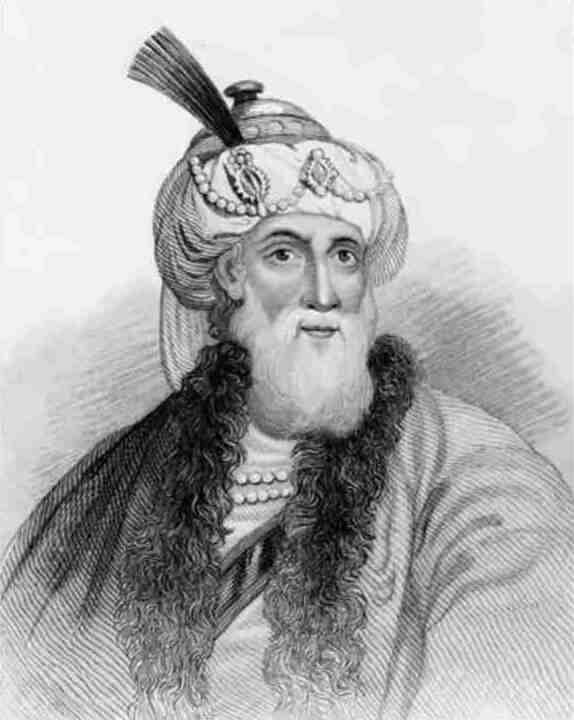
Five centuries before Islam, the Jewish historian Flavius Josephus, writing his Antiquities of the Jews around 93 CE for a Greco-Roman readership, addressed the descent of the Arabs in the course of retelling Genesis. Ishmael’s twelve sons, he writes, occupied the country stretching from the Euphrates to the Red Sea, the land he calls Nabatene, and it is from these sons that the Arab nation derived its tribes.[6] Josephus then records an ethnographic detail that his readers could verify in their own world: the Arabs circumcise their sons at the age of thirteen, he explains, because Ishmael, the founder of their nation, born of Abraham’s concubine, was circumcised at that age.[7] The chronology is drawn directly from Genesis 17:25. In the first century, then, the Jewish community — the people with the greatest interest in guarding the boundaries of the Abrahamic family — regarded Arab descent from Ishmael not as legend but as the accepted explanation of observable Arab practice, and understood the Arabs to be maintaining the covenant sign of circumcision on Ishmael’s own timetable.
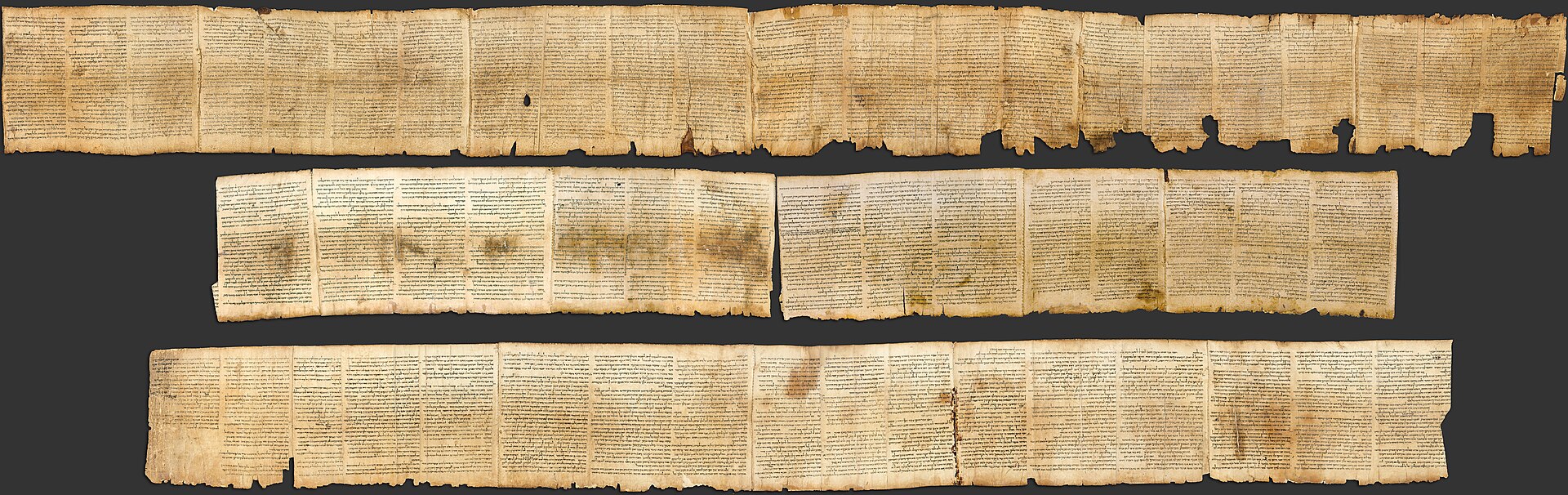
The identification is older still. The Book of Jubilees, a Jewish work generally dated to the second century BCE and preserved among the Dead Sea Scrolls, retells the patriarchal narratives with expansions. It reports that the sons of Ishmael, together with the sons of Keturah, settled in the region extending from Paran to the approaches of Babylon, in all the land facing the eastern desert, and that they intermingled, “and their name was called Arabs, and Ishmaelites.”[8] Two full centuries before the Christian era — and more than seven centuries before Islam — Jewish literature had already committed to writing the equation that later Islamic tradition would inherit: the Arabs are the Ishmaelites, and their territory begins at Paran, the wilderness in which Genesis places Ishmael’s dwelling.[9]
The Pagan Witnesses: Diodorus and the Assyrian Records
The Greek historian Diodorus Siculus, compiling his Library of History around the middle of the first century BCE, preserves a striking notice in his description of the Arabian coast. In the interior beyond the territory he surveys, he records, stands a temple of great antiquity and holiness, “exceedingly revered by all the Arabians.”[10] Diodorus does not name the shrine, and its identification has been discussed since Edward Gibbon connected the passage to Makkah in the eighteenth century.[11] What the text establishes on its own terms, however, is itself remarkable: a pagan geographer, writing seven centuries before Islam, knew of a single Arabian sanctuary whose sanctity was acknowledged across the tribal divisions of the peninsula — a description that corresponds to nothing in the historical record so closely as it corresponds to the pan-tribal inviolability of the Kaaba in the age before the Prophet ﷺ.
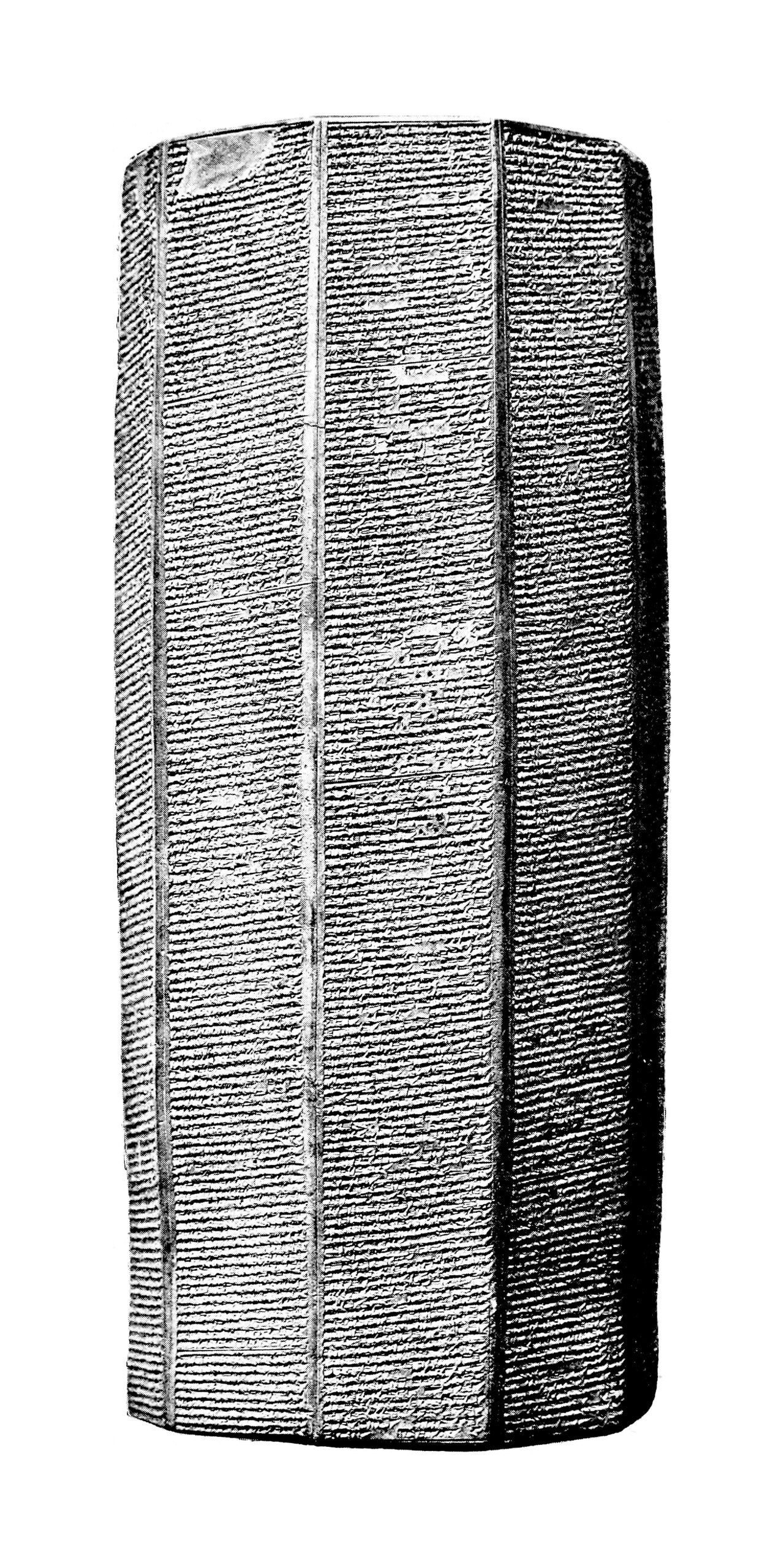
The earliest external witnesses, however, are not literary but epigraphic. The royal inscriptions of the Neo-Assyrian empire, carved in the eighth and seventh centuries BCE, document sustained military and diplomatic contact with the peoples of northern Arabia. Tiglath-Pileser III lists tribute from Tema; Sennacherib and his successors campaign against Adummatu, the “fortress of the Arabs”; Ashurbanipal’s annals recount at length his wars against the confederation of Qedar.[12] These three names — Tema, Dumah (Adummatu), and Qedar (Kedar) — appear together in one other ancient document: the genealogy of Ishmael’s twelve sons in Genesis 25:13–15. The correspondence requires emphasis. The Assyrian scribes were not readers of Genesis and had no theological investment in Abraham’s family; they were recording the actual tribes and oases of Arabia as imperial administration encountered them. Their stone and clay independently confirm that the names the Bible assigns to Ishmael’s sons were the names of real Arabian peoples and places — Tayma in the Hejaz, Dumat al-Jandal in the north, and the Qedarites of the desert. In the sixth century BCE, the Babylonian king Nabonidus took up residence at Tema for a decade, and his Harran stele enumerates the Arabian oases under his control, among them Yathrib — the earliest attestation of the city later renamed Madinah, more than eleven centuries before the Hijra.[13]
The Biblical Framework
Behind all of these witnesses stands the biblical text itself, which supplies the framework the later sources presuppose. Genesis records God’s promise concerning Ishmael in unambiguous terms: “As for Ishmael, I have heard thee: Behold, I have blessed him, and will make him fruitful, and will multiply him exceedingly; twelve princes shall he beget, and I will make him a great nation.”[14] It locates his dwelling in the wilderness of Paran and extends his descendants’ range “from Havilah unto Shur, that is before Egypt, as thou goest toward Assyria” — the caravan corridor of northern Arabia, the same territory the Assyrian records illuminate.[15]
The prophetic literature carries the trajectory further, and in a direction that repays close reading. Isaiah 60, depicting the eschatological ingathering of the nations, names Ishmael’s two firstborn sons among those whose worship God will accept: “All the flocks of Kedar shall be gathered together unto thee, the rams of Nebaioth shall minister unto thee: they shall come up with acceptance on mine altar, and I will glorify the house of my glory.”[16] The offerings of the Ishmaelite tribes are here received upon God’s own altar, in the service of God’s own house.
Isaiah 42, the first of the Servant Songs, is more specific still. The oracle opens with God’s declaration of exclusive worship: “I am the LORD: that is my name: and my glory will I not give to another, neither my praise to graven images.”[17] There follows the summons: “Sing unto the LORD a new song, and his praise from the end of the earth.”[18] The Hebrew term rendered “praise” is tehillah; what the verse announces is a new tehillah — a praise not previously sung — arising not from Zion but from the extremity of the earth. The passage then identifies the singers by name and geography: “Let the wilderness and the cities thereof lift up their voice, the villages that Kedar doth inhabit: let the inhabitants of the rock sing, let them shout from the top of the mountains. Let them give glory unto the LORD, and declare his praise in the islands.”[19] The new praise, in other words, is assigned to the settlements of Kedar — the Ishmaelite tribe of the Arabian interior — and to the dwellers of the desert crags.
Read against subsequent history, the specification is difficult to dismiss. One new formula of praise, and only one, has in fact arisen from the villages of Kedar and spread to the ends of the earth: the tahlīl, Lā ilāha illa Allāh — “there is no god but Allah.” Its content is exactly what Isaiah 42:8 stipulates: the ascription of glory to God alone, to the categorical exclusion of every other object of worship and every graven image. The declaration that sounds from the minarets of Arabia five times each day is, in form and substance, a tehillah that did not exist in Isaiah’s world — a new praise, sung by Kedar’s descendants, whose sole theme is the undivided glory of the one God.
Psalm 84 belongs in the same discussion. The psalm pronounces a blessing upon pilgrims: “Blessed is the man whose strength is in thee; in whose heart are the ways of them. Who passing through the valley of Baca make it a well; the rain also filleth the pools.”[20] The image is of pilgrimage through an arid valley named Baca in which water is found. The Quran, for its part, states: “Indeed, the first House established for mankind was that at Bakkah — blessed and a guidance for the worlds,” employing Bakkah as the ancient name of Makkah — a valley without cultivation, in Abraham’s own description, whose well of Zamzam has sustained pilgrims for millennia.[21] The verbal and thematic correspondence between the psalm’s Baca and the Quran’s Bakkah has drawn the attention of Muslim readers since the earliest centuries, and the psalm’s picture — a blessed pilgrimage route through a dry valley made rich with water — describes the Makkan pilgrimage with a precision that invites the comparison.
The Cumulative Picture
The value of this record lies in its convergence. The Islamic account of Arabia’s past turns out to be attested, component by component, in the archives of the very civilizations that surrounded it. No single witness carries the entire account, and none needs to. The Assyrian inscriptions establish that the sons of Ishmael named in Genesis were historical Arabian tribes and oases. Jubilees establishes that Jewish tradition, centuries before Christ, identified the Arabs as Ishmaelites dwelling from Paran eastward. Josephus establishes that first-century Judaism traced the Arabs’ distinctive rite of circumcision at thirteen directly to Ishmael’s covenant. Diodorus establishes that pagan antiquity knew of one supremely revered sanctuary honored by all the Arabians. Procopius and Nonnosus establish that the sacred months and the sanctuary assembly were institutions of Arabian life before Islam. And Sozomen establishes that Christian scholarship of the fifth century regarded the Arabs as a nation of Abrahamic origin and custom, fallen into idolatry, in partial recovery of its ancestral religion.
These are the components of the Islamic account of Arabia — attested piecemeal, across a millennium and a half, by sources with no connection to Islam and no knowledge of one another. When the Quran declared that Ibrahim and Ismāʿīl had raised the foundations of the House, that Ibrahim had settled his son in an uncultivated valley beside the sacred sanctuary, and that the rites and sacred months of Arabia descended from that foundation before idolatry overgrew it, it was not inventing a past.[22] It was identifying the origin of institutions and identities that the surrounding civilizations had been documenting for over a thousand years. The cleansing of the Kaaba in the year of the conquest of Makkah — the removal of the idols from the ancient sanctuary — was, on this record, precisely what the Prophet ﷺ proclaimed it to be: not the founding of a shrine, but the restoration of one.
Notes
- Sozomen, Ecclesiastical History 6.38; English translation in Nicene and Post-Nicene Fathers, Second Series, vol. 2, ed. Philip Schaff and Henry Wace (New York, 1890). Sozomen wrote c. 440–443 CE, covering church history to 425 CE. ↩
- Quran 3:67; 6:79; 16:120–123. On the ḥunafāʾ of the generation before Islam, see Ibn Isḥāq’s notices of Zayd ibn ʿAmr ibn Nufayl and others, in A. Guillaume, The Life of Muhammad: A Translation of Ibn Isḥāq’s Sīrat Rasūl Allāh (Oxford, 1955), 98–103. ↩
- Procopius, History of the Wars 2.16.18, trans. H. B. Dewing, Loeb Classical Library (Cambridge, MA, 1914), vol. 1. ↩
- Nonnosus, fragment preserved in Photius, Bibliotheca, codex 3; English translation in R. Henry, Photius: Bibliothèque, vol. 1 (Paris, 1959); see also the discussion in Irfan Shahîd, Byzantium and the Arabs in the Sixth Century (Washington, DC, 1995). ↩
- Quran 9:36; cf. 5:97 on the Kaaba as an inviolable sanctuary established for mankind. ↩
- Josephus, Antiquities of the Jews 1.12.4 (§220–221), trans. William Whiston. ↩
- Josephus, Antiquities 1.12.2 (§214); cf. Genesis 17:25. ↩
- Jubilees 20:12–13, trans. R. H. Charles, The Book of Jubilees (London, 1902). Fragments of Jubilees in Hebrew were recovered at Qumran (4Q216–4Q224 and others), confirming its pre-Christian date; see J. C. VanderKam, The Book of Jubilees (Sheffield, 2001). ↩
- Genesis 21:21. ↩
- Diodorus Siculus, Library of History 3.43.2, trans. C. H. Oldfather, Loeb Classical Library (Cambridge, MA, 1939), vol. 2. ↩
- Edward Gibbon, The History of the Decline and Fall of the Roman Empire, ch. 50. ↩
- For the Arabian material in the Assyrian royal inscriptions, see Israel Ephʿal, The Ancient Arabs: Nomads on the Borders of the Fertile Crescent, 9th–5th Centuries B.C. (Jerusalem/Leiden, 1982); the texts of Tiglath-Pileser III in H. Tadmor and S. Yamada, The Royal Inscriptions of Tiglath-Pileser III and Shalmaneser V (RINAP 1; Winona Lake, 2011); Ashurbanipal’s Arab campaigns on the Rassam Cylinder, British Museum. On Adummatu (Dumah/Dumat al-Jandal) in the inscriptions of Sennacherib and Esarhaddon, see Ephʿal, 118–125. ↩
- The Harran stele of Nabonidus (H2), translation in Ancient Near Eastern Texts Relating to the Old Testament, ed. J. B. Pritchard, 3rd ed. (Princeton, 1969), 562–563, listing Tema, Dadanu, Padakku, Hibra, Yadihu, and Yatribu (Yathrib). On Nabonidus at Tayma, see also the cuneiform fragments excavated at the site by the Saudi-German mission. ↩
- Genesis 17:20 (KJV). ↩
- Genesis 21:21; 25:18 (KJV). ↩
- Isaiah 60:7 (KJV). Kedar and Nebaioth are the first two sons of Ishmael in Genesis 25:13. ↩
- Isaiah 42:8 (KJV). ↩
- Isaiah 42:10 (KJV). Hebrew tehillātô (“his praise”), from tehillah. ↩
- Isaiah 42:11–12 (KJV). “The rock” renders Hebrew selaʿ. ↩
- Psalm 84:5–6 (KJV); Hebrew ʿēmeq ha-bākāʾ, “valley of Baca.” ↩
- Quran 3:96; cf. 14:37, Ibrahim’s settling of his offspring “in a valley without cultivation” beside the sacred House. ↩
- Quran 2:127; 14:37; 9:36. ↩