
From Emission to Emergence – A Verse That Stands Against Every Challenge
Surah At-Tariq (86:5–7) presents a sequence that continues to intrigue readers:
5. So let man observe from what he was created.
6. He was created from a fluid, gushing forth.
7. It emerges from between the backbone and the ribs.
🔢 Structural Observation: Two Distinct Sentences, Two Stages
The Qur’an presents two distinct grammatical clauses, each carrying its own subject and verb:
- Verse 6: Describes the act of ejaculation — “a fluid, gushing forth” (mā’ dāfiq)
- Verse 7: Describes a second stage — “It emerges from between the backbone and the ribs.”
This clear separation allows for a powerful observation: the Qur’an is not describing a single moment, but a dynamic process in human creation.
🧬 A Simple Science Quiz First
From where does semen actually emerge during ejaculation?
A. The balls
B. The pelvis between the tailbone and ribs
C. Both
D. None of the above
If you chose B, you’re correct. Most people, including today’s loud wannabe polemics, still don’t know this basic anatomical fact.
The Anatomical Reality Critics Don’t Know
Ejaculate does not come from the testes during intercourse. Here’s what actually happens:
- Seminal vesicles: Contribute 65–70% of semen volume – located behind the bladder in the pelvic cavity
- Prostate gland: Adds 25–30% – located behind the bladder
- Cowper’s glands: Trace amounts – also internal
- Sperm cells: Only ~5% of total volume
And here’s the knockout fact: that 5% of sperm doesn’t come from the balls during ejaculation either. Sperm mature and are stored for weeks in the epididymis and ampulla of the vas deferens, located behind the bladder, deep inside the pelvic cavity.

One hundred percent of what emerges during ejaculation comes from internal structures located between the vertebral column posteriorly and the anterior abdominal structures. Nothing comes forth from the external scrotum. The critics’ imagined reading—fresh sperm manufactured in the scrotum during intercourse—is biologically impossible.
Anatomical Framework
The human trunk is bounded by:
- The spine (vertebral column) posteriorly
- The ribs and abdominal wall anteriorly
- The pelvic cavity sitting within this field
Draw a line from the tailbone toward the ribs and you are literally tracing the region where all core reproductive organs function—male and female.
Five Valid Interpretations – All Anatomically Sound
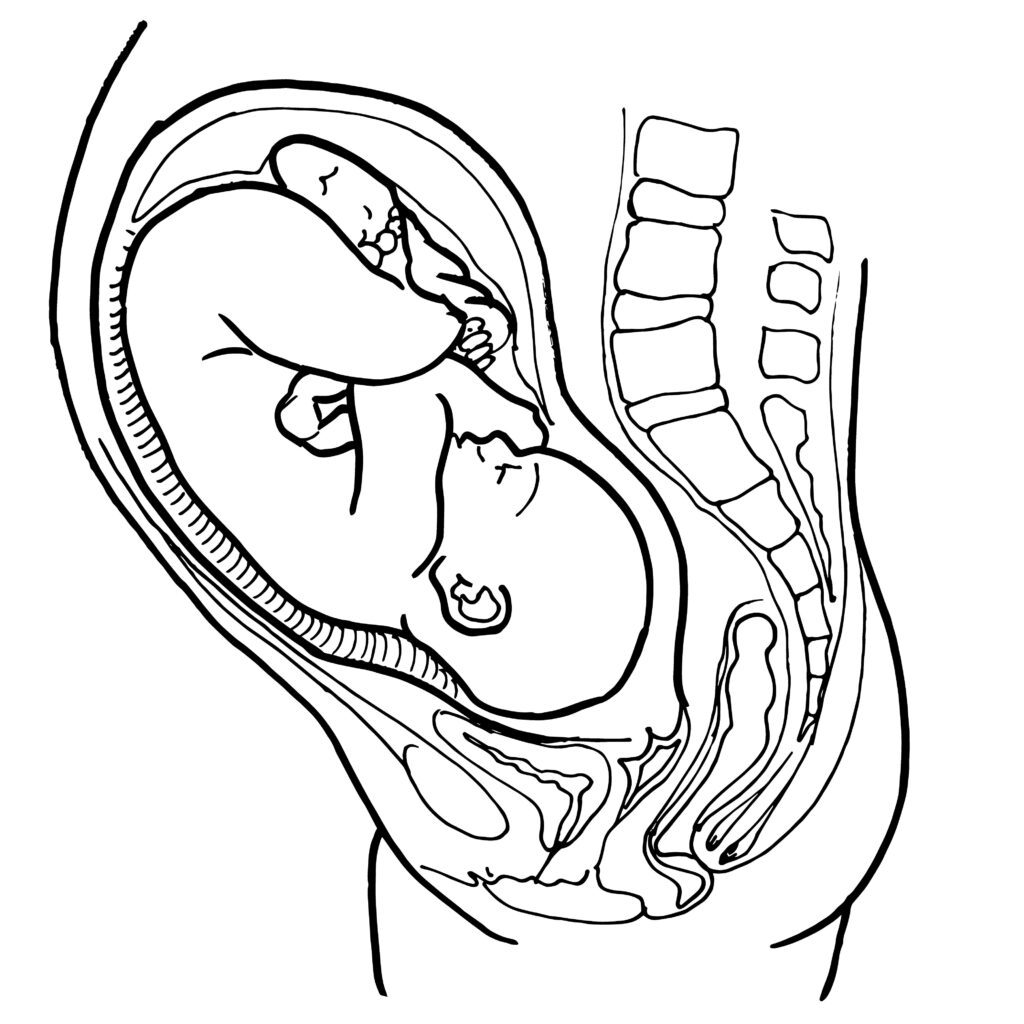
Interpretation 1: Childbirth
“It emerges from between the backbone and the ribs.” (86:7)
The verb yakhruju can grammatically refer to the child mentioned in the context.
Anatomical Correlation
A baby emerges through the birth canal within the pelvic outlet:
- Posteriorly backed by the spine
- Anteriorly bordered by the lower abdominal structures and rib cage
The birth canal runs through a passageway bounded by these anatomical landmarks. Childbirth literally takes place in this trunk cavity.
Linguistic Accuracy
- Yakhruju (يَخْرُجُ) is present tense, meaning “it emerges” or “he comes out / is born” (depending on context)
- Min bayni translates as “from between”
- No possessive pronoun is used — allowing this location to refer generally to the anatomical space
Result: No contradiction. Anatomically accurate.
Interpretation 2: The Recipient’s Anatomy During Copulation
“It emerges from between the backbone and the ribs.”
During intercourse, semen emerges from the urethra and is deposited into the vaginal canal.
Anatomical Correlation
The female reproductive tract where fertilization occurs:
- Vagina – lies in the pelvic cavity
- Cervix – between the spine posteriorly and abdominal wall anteriorly
- Uterus – deep in the pelvic cavity
- Fallopian tubes – positioned below the 12th rib (T12) and in front of the lower spine (lumbar vertebrae)
Drawing a line from the tailbone (coccyx) to the side of T12, the fallopian tubes rest roughly in the middle of this anatomical zone. This is literally where fertilization begins.
Linguistic Accuracy
- The phrase min bayni al-ṣulb wa al-tarā’ib means “from between the backbone and the ribs”
- Describing this region as “between the backbone and ribs” is a broad spatial reference
- Anatomically, the deposition site and reproductive tract do lie within that internal cavity
Result: Anatomically correct. The verse accurately describes where conception occurs.
Interpretation 3: Ejaculate Origin – The One Critics Fear
“He was created from a fluid, gushing forth. It emerges from between the backbone and the ribs.”
This interpretation focuses on where the fluid actually comes from during ejaculation.
The Physiological Reality
As we’ve already established:
- The glands that make semen → internal pelvic cavity
- The vas deferens ampulla storing sperm → internal pelvic region behind the bladder
- Ejaculatory ducts → posterior to the bladder
95% of semen volume comes from internal glands:
- Seminal vesicles: 65-70%
- Prostate: 25-30%
- Cowper’s glands: remainder
The remaining 5% (sperm) also does not come from the scrotum during ejaculation—it comes from internal storage in the epididymis and vas deferens, behind the bladder.
Anatomical Correlation
All these structures are located:
- Deep inside the pelvic cavity
- Between the vertebral column posteriorly
- And the anterior abdominal structures
- None of this is in the scrotum
The Knockout Fact
The functional origin of ejaculated semen is entirely internal. The critics’ imaginary reading—fresh sperm being produced on the spot in the external testes and “coming forth” from there—is biologically impossible.
Result: This single scientific fact wipes out the critics’ cartoon-level version of human physiology.
Interpretation 4: Female Egg
“It emerges from between the backbone and the ribs.”
The subject can also refer to the female gamete (egg/ovum).
Anatomical Correlation
Female reproductive organs lie within the pelvic cavity:
- Ovaries – positioned between posterior vertebrae and anterior abdominal wall
- Fallopian tubes – below the 12th rib (T12), in front of lower spine
- Uterus – centered deep in the pelvic cavity
During ovulation, the egg is released from the ovary and travels through the fallopian tube—all within that same anatomical field bounded by the spine posteriorly and the abdominal structures anteriorly.
Linguistic Accuracy
- Yakhruju can mean “it emerges”
- The egg literally emerges (is released) within this internal anatomical space
- No possessive pronoun limits the reference to male or female anatomy specifically
Result: The description is accurate for female reproductive biology. The egg emerges entirely inside this internal space.
Interpretation 5: Neural Control
“It emerges from between the backbone and the ribs.”
This interpretation considers the neurological command that triggers ejaculation.
Anatomical Correlation
Ejaculation is coordinated by the sympathetic nervous system:
- Specifically the thoracolumbar spinal cord segments T12–L2
- These neural control centers are literally housed within the vertebral column (the backbone)
- The signal that triggers the entire reproductive process originates from the spine
The command that causes emission and ejaculation arises from nerve centers between the thoracic and lumbar regions.
Linguistic Accuracy
- The verse can be read as describing where the process originates (the neural command)
- “Between the backbone and ribs” broadly describes the thoracolumbar region where these spinal segments are located
Result: Neurologically sound. The command signal originates within the spinal column.
The Only Impossible Interpretation
Every internal biological process named here occurs inside the trunk, between the spine and the anterior body wall.
Five valid readings exist:
- Childbirth interpretation → anatomically accurate
- Copulation/recipient interpretation → anatomically correct
- Semen-origin interpretation → physiologically precise
- Egg interpretation → anatomically sound
- Neural control interpretation → neurologically accurate
The only interpretation that is biologically impossible is the one critics invented themselves:
“Semen is freshly produced in the scrotum and comes from there during intercourse.”
False. Scientifically illiterate. A strawman—and nothing the verse ever stated.
Their argument doesn’t just fail. It evaporates.
The Miracle Question
And wow, what a miracle. How did the author of the Qur’an know this?
Fourteen hundred years before modern anatomy textbooks mapped out:
- The ejaculatory ducts
- The seminal vesicles
- The internal storage systems
- The pelvic origin of reproduction
- The location of the fallopian tubes
- The neural control mechanisms
How did a 7th-century text describe the functional origin with such precision that it accommodates five valid anatomical interpretations while the only impossible reading is the one critics themselves invented?
Timeless Language, Evolving Understanding: The Qur’an and the Dynamic Journey of Human Creation
This article demonstrates the remarkable linguistic flexibility and adaptive resonance of the Qur’an, focusing on Surah At-Tariq (86:5–7). We highlight structural and linguistic features in the verse pair that describe biological processes with extraordinary precision.
What makes the Qur’an extraordinary is its ability to satisfy understanding at every era without causing headache:
- At the time of revelation, the phrasing aligned comfortably with prevailing understanding—without causing theological or intellectual disruption
- Today, with advanced anatomical knowledge, the same verses properly describe the internal processes of reproduction in ways that resonate with modern biology, without naming organs explicitly
We illustrate here that the Qur’an’s timeless and general linguistic style allows for a miraculous elasticity—one that avoids contradiction and accommodates deeper readings as human understanding progresses. With the deep pondering the Qur’an repeatedly encourages, verses are and can also often be used to advance scientific knowledge and research.
Critical Analysis Notes
This presentation includes:
- Linguistic flexibility demonstrated through multiple valid grammatical readings
- The distinction between classical commentary and modern anatomical understanding
- Anatomical precision that aligns with current medical knowledge
- The value of reading the Qur’an not just as it was understood, but also how it continues to engage the human intellect in every era
In short, this is not an attempt to force science into scripture, but to highlight the unusual precision and durable phrasing of a text that still invites meaningful reflection—even across centuries of evolving knowledge.
Surah At-Tariq (86:5–7) continues to invite reflection, not just spiritually, but scientifically.
And Allah knows best.