A Mystery Hidden in Plain Sight
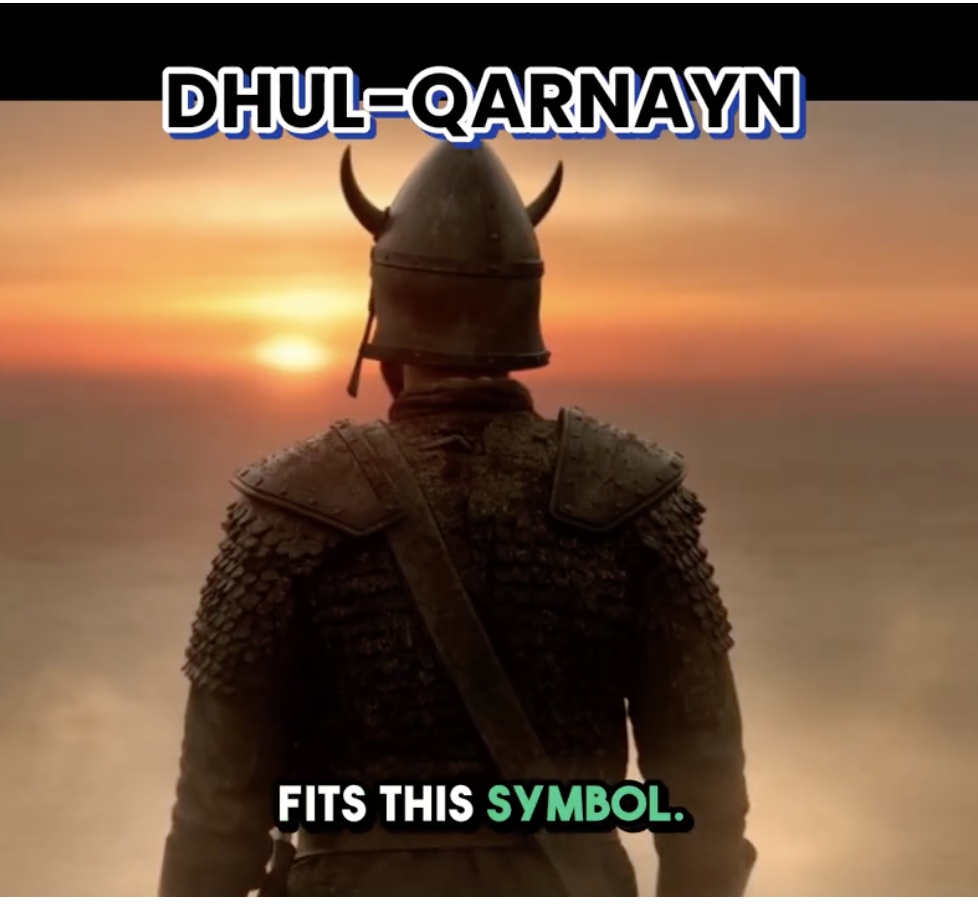
For over a millennium, Islamic scholars have debated the identity of Dhul-Qarnayn, the enigmatic figure in Surah Al-Kahf who traveled “from the rising place of the sun to its setting.” Most modern discussions revolve around Alexander the Great, but this identification crumbles under scrutiny. The answer lies not in Greek history, but in the Jewish scriptures—and it has been there all along.
The key to unlocking this mystery is understanding why Surah Al-Kahf was revealed in the first place.
The Jewish Test
According to classical Islamic sources—Al-Tabari, Ibn Kathir, and Al-Qurtubi—the revelation of Surah Al-Kahf came in response to a deliberate test. The Quraysh of Mecca, seeking to discredit Muhammad’s prophethood, sent emissaries to the Jewish rabbis of Medina. The rabbis provided three questions designed to verify whether Muhammad truly received divine revelation:
- Ask him about young men who disappeared in ancient times—what was their story?
- Ask him about a man who traveled the earth, reaching the east and the west—what was his story?
- Ask him about the Spirit—what is it?
The Quran answered all three. The first question was addressed in verses 9-26 of Surah Al-Kahf (the People of the Cave). The second in verses 83-98 (Dhul-Qarnayn). The third in Surah 17:85.
This context is crucial. The rabbis were not testing Muhammad with random trivia. They were testing him with questions from their own scriptures. They expected him to know figures and stories preserved in Jewish tradition. Therefore, when they asked about “a man who traveled from east to west,” they were asking about someone in the Hebrew Bible.
Alexander the Great appears nowhere in Jewish scripture. He died in 323 BCE, more than three centuries after the Hebrew Bible was essentially complete. He was a Greek polytheist who declared himself divine—hardly a figure Jews would use to test a prophet’s legitimacy.
But there is one figure in Jewish scripture who fits perfectly: Cyrus the Great of Persia.
The Only Gentile Messiah
Isaiah 45:1 contains one of the most startling verses in the Hebrew Bible:
“Thus says the LORD to His anointed, to Cyrus…”
The Hebrew word translated as “anointed” is mashiach—messiah. Cyrus is the only non-Israelite in the entire Bible given this title. This is not casual praise. It is a divine appointment. God calls Cyrus by name, claims him as His instrument, and describes his mission in prophetic detail.
Why? Because Cyrus freed the Jews from Babylonian captivity in 539 BCE, allowed them to return to Jerusalem, funded the rebuilding of the Temple, and restored their religious autonomy. To the Jewish people, Cyrus was not merely a benevolent king—he was a deliverer ordained by God Himself.
If Jewish rabbis in 7th-century Medina wanted to test whether Muhammad knew the great figures of Jewish salvation history, Cyrus would be the perfect candidate. He was important enough to matter, but obscure enough outside Jewish circles that only genuine divine knowledge could provide accurate details.
From the Rising of the Sun
Isaiah’s prophecies about Cyrus use remarkably specific geographic language. Isaiah 41:25 states:
“I have stirred up one from the north, and he came; from the rising of the sun (mimizrach-shemesh) he calls on my name.”
The phrase mizrach-shemesh literally means “from the place where the sun rises”—a poetic way of saying “from the east.” Every major Jewish commentator—Rashi (11th century), Ibn Ezra (12th century), Radak (13th century), and Malbim (19th century)—identifies this as referring to Cyrus coming from Persia, located to the east of Israel.
Isaiah 45:6, situated in the middle of the Cyrus prophecy, expands this geographic framework:
“So that from the rising of the sun to the place of its setting (mimizrach-shemesh u-mi-ma’aravah), people may know…”
This is not ordinary directional language like “east and west.” It speaks of places—the place where the sun rises and the place where it sets. This is the same unusual spatial framing found in the Quran.
Compare this to Surah Al-Kahf. Quran 18:86 and 18:90 describe Dhul-Qarnayn reaching:
- maghrib al-shams (the setting place of the sun)
- matli’a al-shams (the rising place of the sun)
The parallel is unmistakable. Both texts use the same rare geographic formulation—not cardinal directions, but places defined by the sun’s position. Both apply this language to a divinely appointed ruler who traveled the breadth of the known world. The linguistic correspondence is too precise to be coincidental.
The Two Horns of Media and Persia
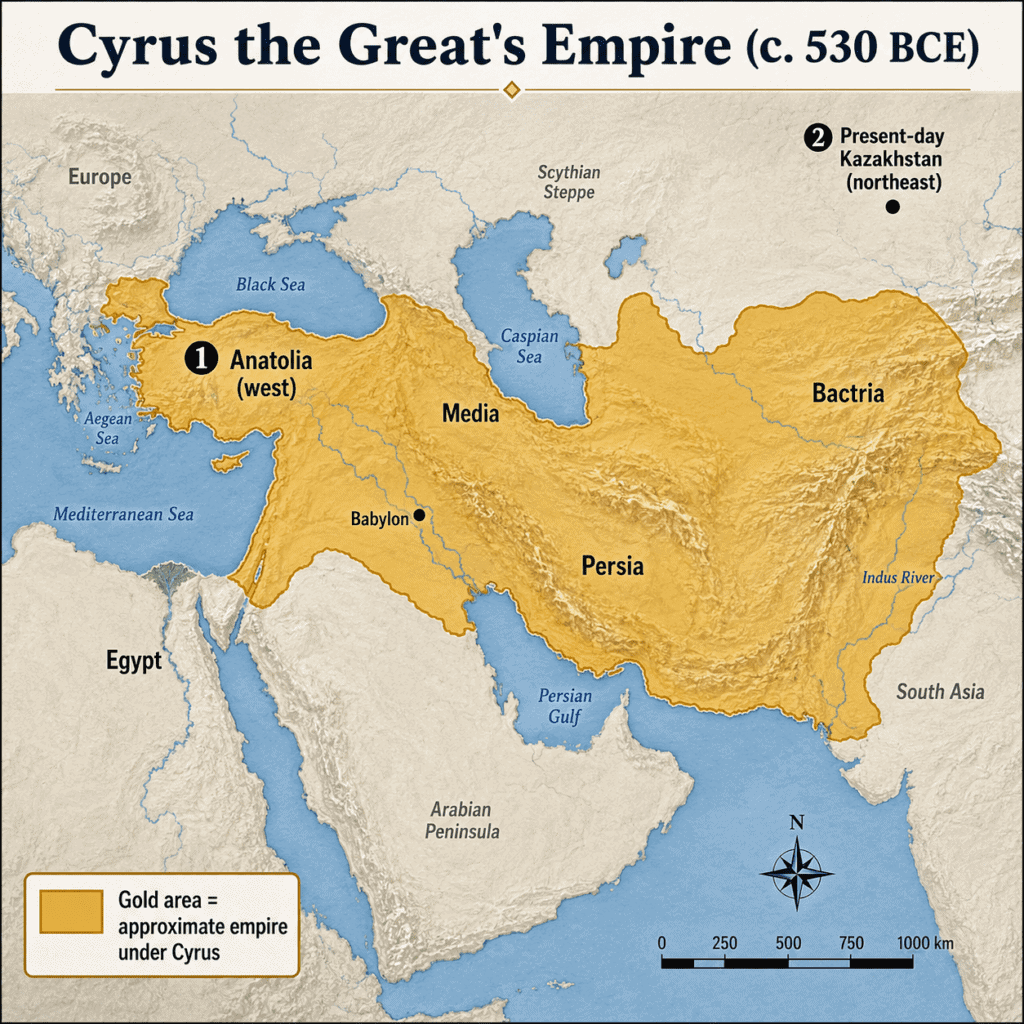
The name “Dhul-Qarnayn” means “Possessor of Two Horns.” The Book of Daniel provides the interpretation. In a prophetic vision, Daniel sees a ram with two horns battling other beasts. Daniel 8:20 explicitly identifies this symbol:
“The two-horned ram that you saw represents the kings of Media and Persia.”
Cyrus founded the Medo-Persian Empire by uniting these two kingdoms under his rule. The “two horns” are not decorative—they represent the dual nature of his empire. Archaeological evidence confirms that Persian kings wore horned crowns as part of their royal regalia, visible in cylinder seals and reliefs from sites like Pasargadae and Persepolis.
No other figure in Jewish scripture fits this symbolism. The two-horned imagery is specifically and explicitly linked to the Persian monarchy, and Cyrus is the founder of that monarchy.
The Geography of Empire
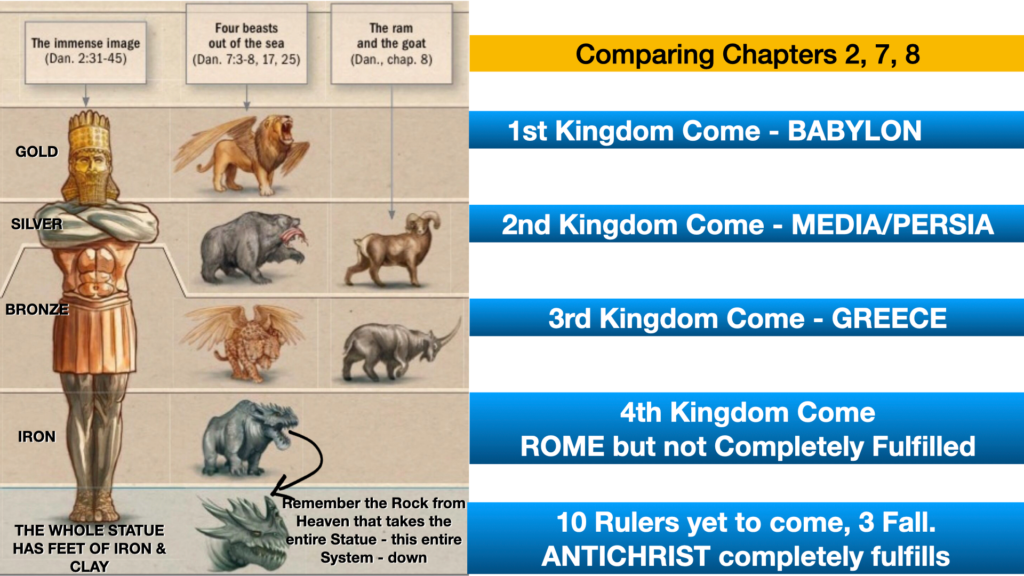
The Quran’s geographic descriptions are not vague poetic flourishes. They are remarkably precise—and they match Cyrus’s actual campaigns with startling accuracy.
The Rising Place: The Kazakh Steppe
Quran 18:90 describes Dhul-Qarnayn reaching the rising place of the sun, where he found people “for whom We had not made against it any shelter.” Classical commentators like Al-Tabari and Ibn Kathir explain this as describing people living in a land without trees, mountains, or buildings—completely exposed to the sun.
This description perfectly fits the Kazakh Steppe, the world’s largest continuous dry steppe at over 804,000 square kilometers. It is a vast, flat grassland stretching across modern Kazakhstan, virtually treeless and without natural shade. Temperatures in summer routinely exceed 40°C (104°F) with no relief from the sun.
The nomadic tribes who lived there—the Massagetae and Scythians—did not build permanent cities. They lived in portable felt tents (yurts), moving seasonally with their herds. There were no stone buildings, no forests, no mountains—nothing to provide shelter from the relentless sun.
And this is exactly where Cyrus went. According to Herodotus, Cyrus launched his final military campaign into the territory of the Massagetae in 530 BCE. He crossed the Syr Darya River (ancient Jaxartes) and invaded the steppe. Queen Tomyris, leader of the Massagetae, ambushed his forces. Cyrus was killed in the battle. This was the absolute eastern limit of his conquests—the “rising place of the sun” where people had no shelter.
The Setting Place: Anatolia’s Muddy Springs
Quran 18:86 describes Dhul-Qarnayn reaching the setting place of the sun, where “he found it setting in a muddy spring (‘ayn hamiah).” Critics have mocked this as scientific ignorance, but they misunderstand the text. This is observational language—the same way every culture describes the sun “setting into the sea.”
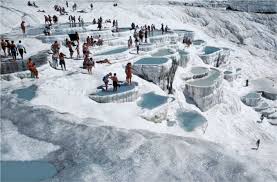
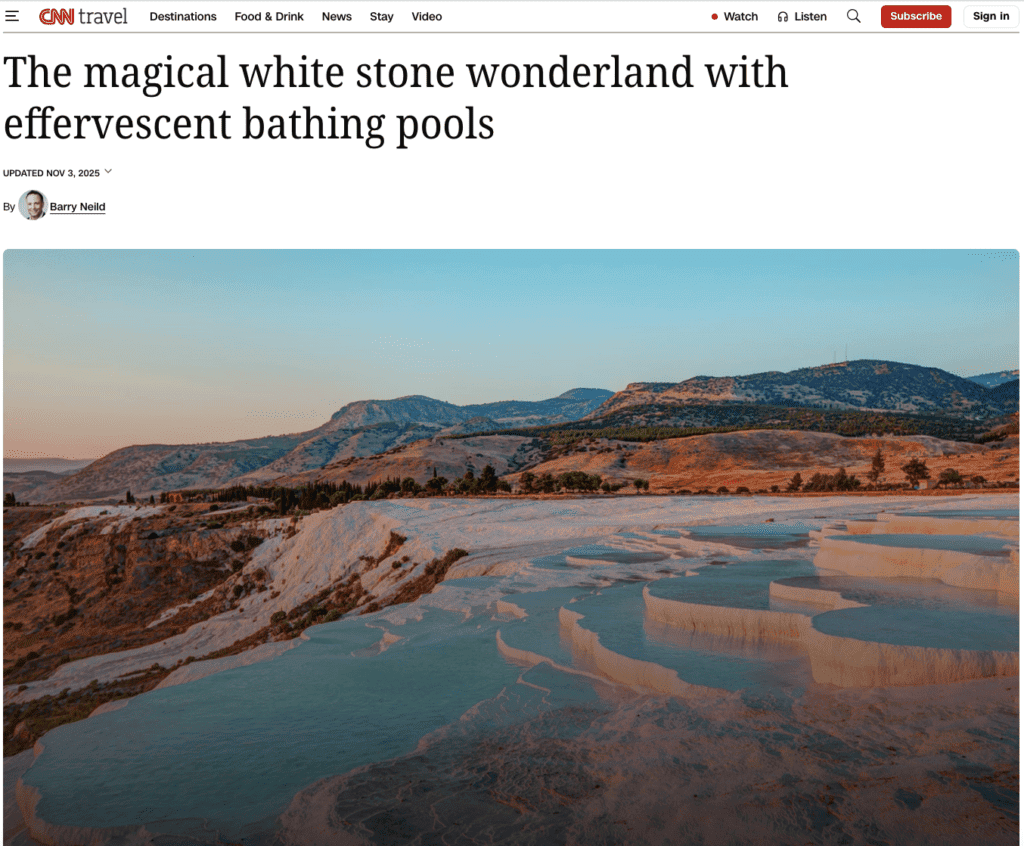
The Arabic phrase ‘ayn hamiah means a spring with dark, muddy, or turbid water. Western Anatolia, where Cyrus’s westward expansion ended, is famous for exactly this. The region contains numerous ancient thermal springs with dark, mineral-rich, muddy water:
- Sultaniye Hot Springs in southwestern Turkey produces naturally dark brown sulfurous mud used for therapeutic baths since antiquity.
- Pamukkale (“Cotton Castle”) features hot springs that deposit white calcium carbonate, but the source water is dark and mineral-laden before it cools.
- Springs near Sardes, the Lydian capital that Cyrus besieged in 547 BCE, were known for their iron-rich, muddy thermal waters.
Standing at such a spring on the Aegean coast at sunset, an observer would see the sun appear to descend into the dark water on the horizon. This is standard phenomenological description, not a claim about solar physics.
Cyrus’s western campaigns conquered Lydia and reached the Aegean Sea—the literal western edge of the known world from a Persian perspective. From the Aegean in the west to the Kazakh Steppe in the east, he traveled from the place where the sun sets to the place where it rises.
The Barrier Against the North
The final geographic detail in the Quran concerns a barrier built against “Gog and Magog” (Ya’juj and Ma’juj)—a northern threat that periodically raids settled lands. In Jewish tradition, these names represent northern nomadic hordes, particularly Scythian and related tribes from the Eurasian steppe.
Persia’s greatest vulnerability was the Caucasus mountain region, where narrow passes provided invasion routes from the steppe into civilized lands. The most famous of these was the Derbent Pass (also called the Caspian Gates), a narrow corridor between the Caucasus Mountains and the Caspian Sea.
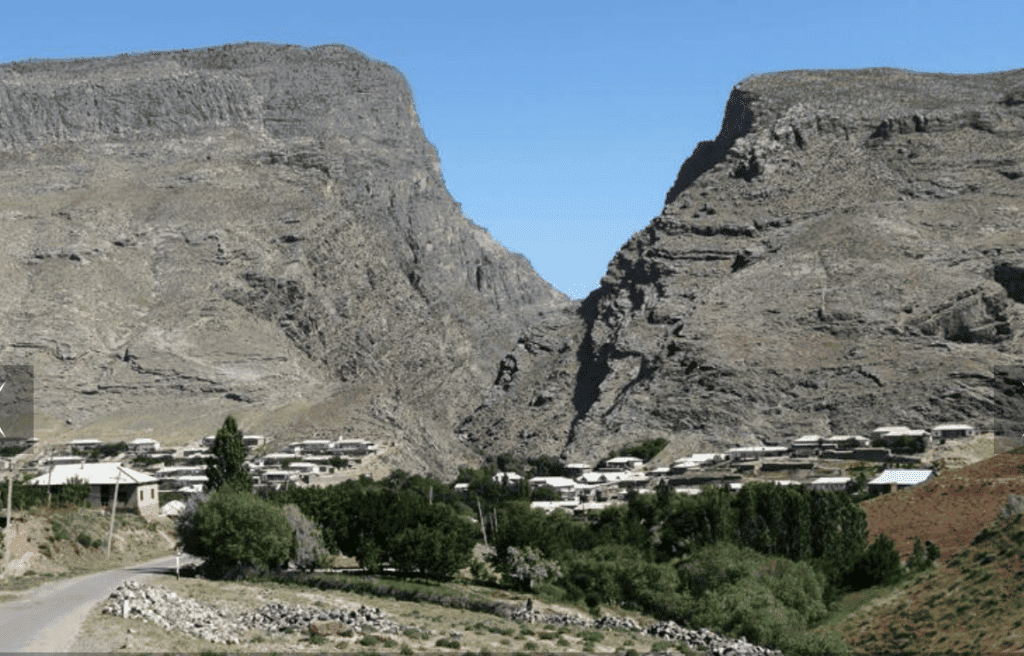
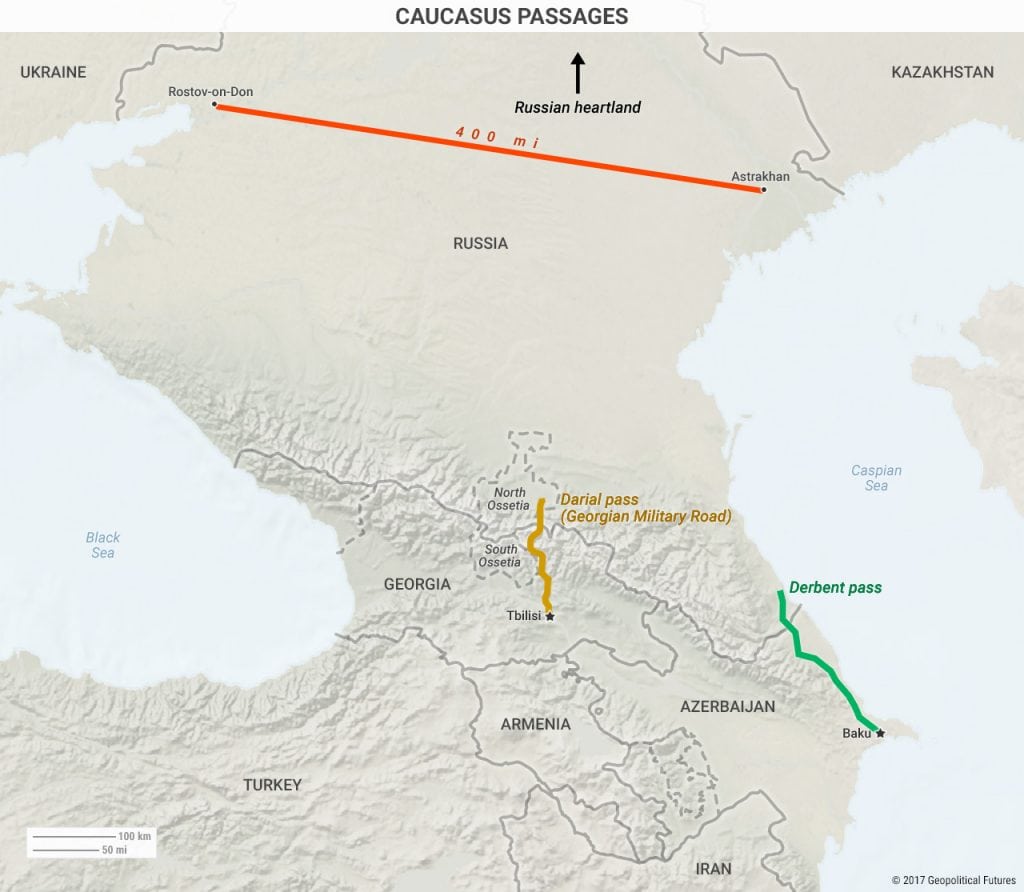
Archaeological evidence confirms that fortifications were built here during the Achaemenid period (6th century BCE)—Cyrus’s era. These walls served the exact purpose described in the Quran: blocking nomadic invasions from the north. Later Persian dynasties reinforced and expanded these fortifications, but the original construction dates to the founding of the Persian Empire.
The Quran’s description of a barrier “between two mountains” built with iron and copper to restrain northern raiders is not mythological. It is an accurate description of Persian defensive architecture in the Caucasus region—the same geopolitical problem Cyrus faced and addressed.
Phenomenological Report in Qur’an
The Qur’an does not say “the sun physically entered the spring.” It says “he found it setting…” The verb places the scene in Dhul-Qarnayn’s experience. That is literal, but viewpoint-bound. It gives phenomenological or observer-relative language.
The Qur’an is literal in reporting what Dhul-Qarnayn found from his viewpoint. “He found it setting…” means that was how the scene appeared to him at the western limit of his journey. Just like a person can be literally reported to have said “I find her beautiful.” Literal description of perception is not the same as literal cosmology.
Why Not Alexander?
The identification with Alexander the Great, popularized in medieval “Alexander Romance” literature, fails on every point:
- Alexander does not appear in Jewish scripture. Why would rabbis test Muhammad about a Greek conqueror unknown to their tradition?
- Alexander was a polytheistic pagan who declared himself the son of Zeus and demanded divine worship—the antithesis of a righteous monotheistic ruler.
- Greek and Macedonian royal iconography used the diadem (a simple headband), not horned crowns. The “two horns” symbolism doesn’t fit.
- Alexander’s eastern campaigns ended in India, a region of forests, rivers, cities, and abundant natural shade—the opposite of “no shelter.”
- Alexander never built defensive barriers in the Caucasus. His campaigns went south and east, not north.
- He died just 33 years old in Babylon, never returning to his homeland—hardly the completed, divinely guided journey described in the Quran.
The Alexander identification appears to be a later confusion, as his legends became more famous and widespread in the centuries after the Quran’s revelation. But textually, geographically, and theologically, Alexander simply does not fit.
Conclusion: The Weight of Evidence
When we place the evidence side by side, the identification becomes clear:
- Jewish rabbis tested Muhammad with questions from their scriptures.
- Cyrus is the only gentile in those scriptures called God’s “messiah.”
- Isaiah describes Cyrus using the identical “rising of the sun” / “place of setting” language found in Surah Al-Kahf.
- Daniel explicitly defines the “two horns” as representing Media and Persia—Cyrus’s empire.
- Cyrus’s eastern campaigns ended on the Kazakh Steppe, where he died fighting the Massagetae—a treeless land where nomads had “no shelter.”
- His western campaigns reached Anatolia’s famous muddy thermal springs on the Aegean coast.
- He built fortifications in the Caucasus passes against northern nomadic threats.
Every detail aligns. The Quran answered the rabbis’ question accurately, identifying the same figure their own prophets had praised. Dhul-Qarnayn is Cyrus the Great—and the evidence has been in the Jewish scriptures for 2,500 years.
The mystery was never meant to be a mystery at all. It was a test—and the Quran passed.