The Doctrina Iacobi: The Forgotten 7th Century Document That Mentioned Islam
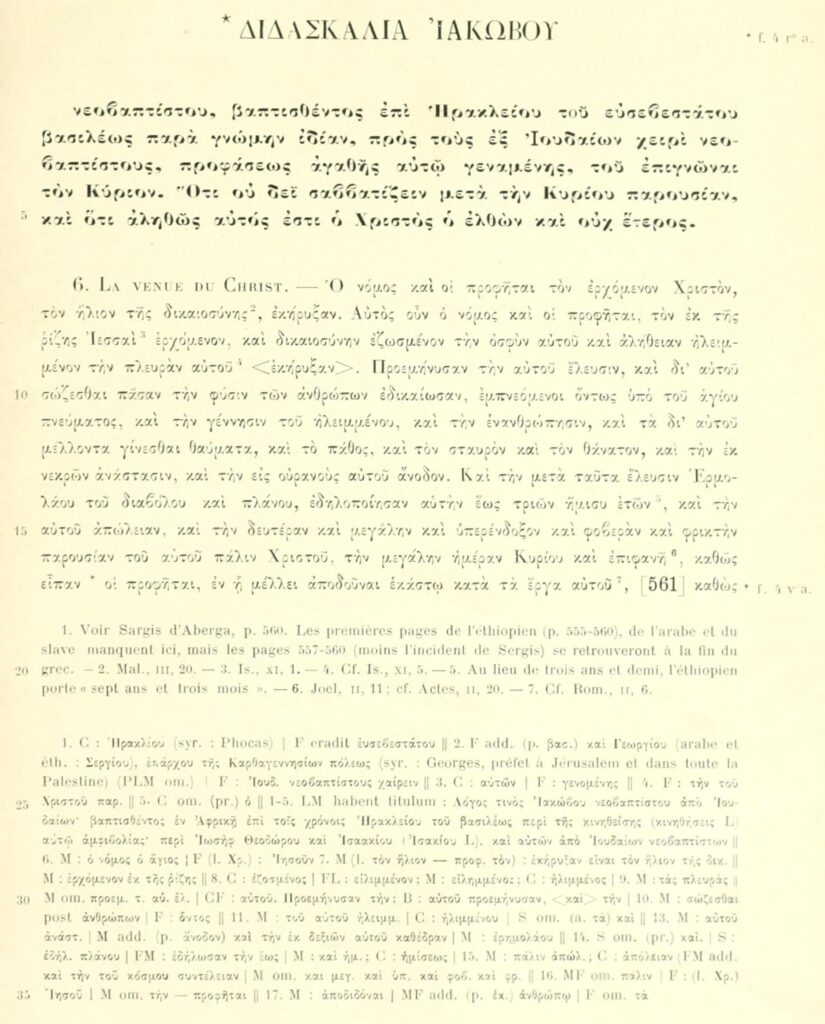
When people talk about the earliest records of Islam outside of Muslim tradition, most immediately think of later Byzantine or Latin chronicles. But few have heard of a remarkable Greek text written in 634 AD, called the Doctrina Jacobi (“The Teaching of Jacob”).
This makes it one of the earliest non-Islamic references to Prophet Muhammad ﷺ—penned just a year after his passing. And it gives us an astonishing window into how Jews and Christians were reacting to the rise of Islam in real time.
What Is the Doctrina Jacobi?
The Doctrina Jacobi is a Christian polemical tract. It is set in Carthage, though written in Syria-Palestina, and survives in Greek, Latin, Arabic, Ethiopic, and Slavonic translations.
The story is framed as a dialogue among Jews who have been forcibly baptized by Byzantine authorities. One of them, Jacob, has become sincerely Christian and tries to persuade the others to embrace their new faith. Midway through, a Jewish merchant named Justus arrives from the east, bringing disturbing news:
“A prophet has appeared, coming with the Saracens, and he is proclaiming the advent of the anointed one (Messiah).”
This is an astonishing statement. It is not Muslims making the claim—it is Jews and Christians discussing reports of a prophet among the Arabs (Saracens, a term often used for Ishmaelites).
The Prophet With the Saracens
The text makes it clear that by 634:
- A prophet was already associated with the Arabs.
- His message was tied to messianic expectations.
- Non-Muslims knew of him and were debating what it meant.
One old man in the dialogue, however, rejects the prophet, saying:
“He is false, for the prophets do not come armed with a sword.”
This single line reveals the criteria of rejection: not that Muhammad didn’t exist, not that his message was unknown—but that he fought wars.
Jewish Hope and Tragic Irony
The Jewish characters in the Doctrina Jacobi are caught in a tragic bind.
- They had denied Jesus as Messiah.
- Now, under harsh Byzantine persecution and forced conversions to Christianity, they looked for a deliverer.
- Some of them saw hope in the Arab prophet and his movement.
But because of the sword, the old man insists they must have missed the real Messiah long ago—and all that is left is to await the Antichrist.
This is tragic irony. The Jews who were waiting for a liberator were staring at Islam’s rise in front of them—and dismissed it not for lack of evidence, but because their own expectations didn’t allow for a warrior-prophet.
The Fourth Kingdom of Daniel
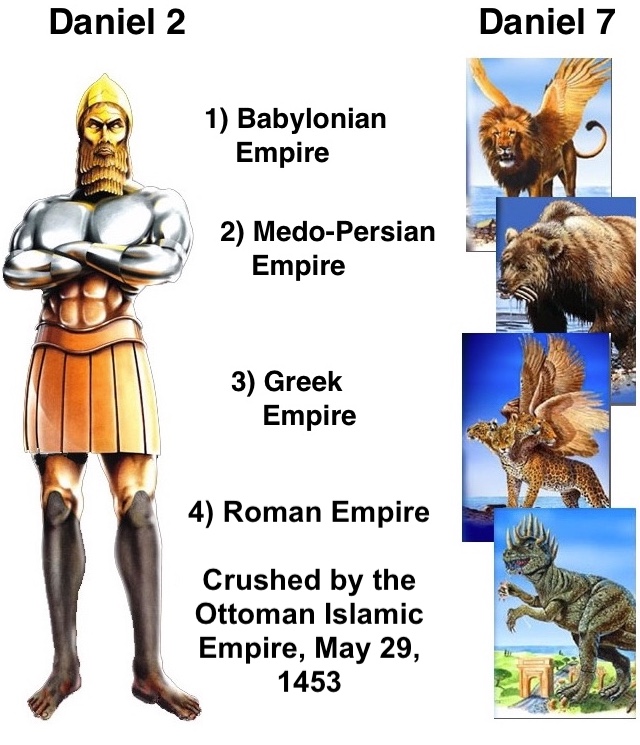
Another striking element in the text is its apocalyptic imagery. Jacob compares the Byzantine Empire to the “fourth beast” of Daniel’s prophecy (Daniel 7).
In Jewish and Christian eschatology, this fourth kingdom was the last empire before God’s kingdom would arrive.
- The Babylonians were seen as the first.
- The Persians and Medes as the second.
- The Greeks as the third.
- And the Romans/Byzantines as the fourth.
The implication? The Jews saw the collapse of Byzantine power under the Arabs as part of the divine timetable. Later history reinforced this vision: the Ottoman Empire, an Islamic power, eventually finished what the Arabs began, toppling Constantinople in 1453 and ending the Roman order for good.
Saracens, Ishmaelites, and Early Testimony
The Doctrina Jacobi calls the Arabs Saracens—a term used broadly for Ishmael’s descendants. This shows how non-Muslims immediately linked Islam to the Abrahamic family line through Ishmael, even if they rejected its prophet.
Far from being a late legend, this is direct testimony: non-Muslims in 634 knew of Muhammad, knew he came with scripture and proclamation, and were wrestling with what it meant.
Why This Matters
The Doctrina Jacobi is undeniable historical evidence:
- It dates to 634, right after Muhammad’s death.
- It explicitly mentions a prophet with the Arabs.
- It records Jewish reactions—both hope and rejection.
- It frames Islam in the apocalyptic worldview of Daniel’s fourth kingdom.
- It confirms that Islam was already shaking the empires of the world.
Early Islam was not a myth, not a fabrication of later centuries—it was known, feared, and debated at the highest levels of Jewish and Christian thought.
Final Reflection
The Jews in this text hoped Islam might be their deliverance from oppression. Some dismissed Muhammad ﷺ because he carried a sword. Others recognized in him the stirrings of prophecy.
History, however, speaks for itself. The Byzantine “fourth kingdom” did collapse. Islam did rise. And what began with the Doctrina Jacobi in 634 would echo across centuries of faith and empire.