For centuries, Christians have been reading their Bible in translation, unaware that the original languages preserve something remarkable: the very words “Muslim” and “Islam” embedded in both the Old and New Testaments. Not as foreign concepts, but as the authentic Semitic terminology used by the biblical authors themselves.
The evidence isn’t hidden in obscure manuscripts. It’s sitting in plain sight in the Aramaic Peshitta, the Hebrew Bible, and confirmed by Christianity’s own most respected biblical scholars.
The New Testament Evidence: James 1:25-27
The Problem with “Perfect Law”
Open any English Bible to James 1:25 and you’ll read:
“But whoever looks intently into the perfect law that gives freedom and continues in it—not forgetting what they have heard, but DOING it—they will be blessed in what they do.”
The phrase “perfect law” makes no theological sense in this context. What is a “perfect law”?
But here’s the critical issue: James never said “perfect law.” He didn’t speak Greek. James was a Palestinian Jew who taught in Aramaic, the language of Jesus and the early Jerusalem church.
What James Actually Said in Aramaic
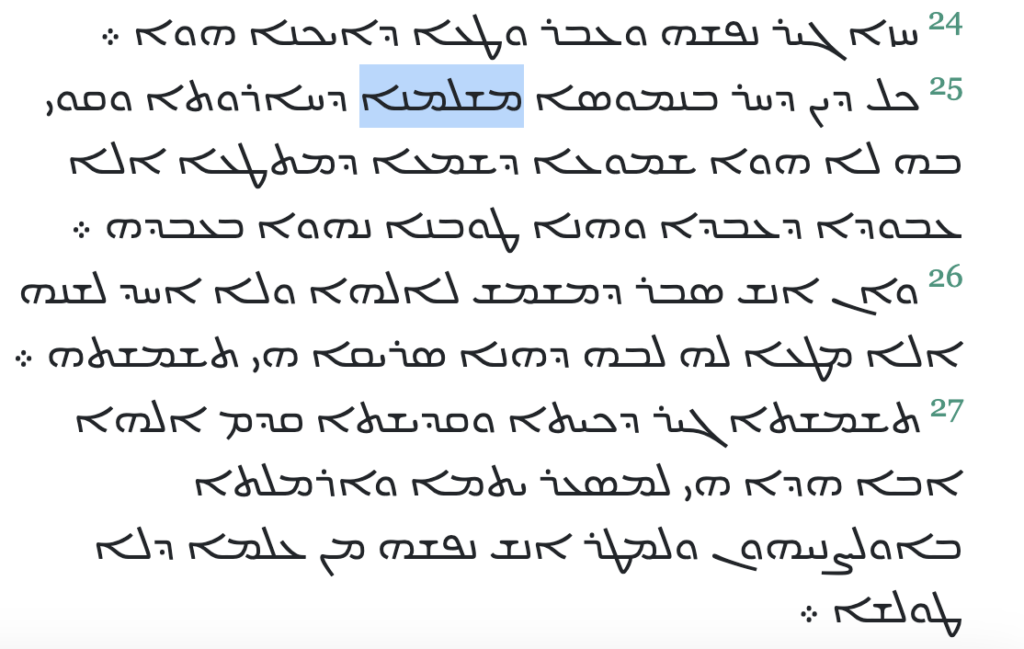
When we go back to the Syriac Peshitta—the ancient Aramaic text of the New Testament—we find what James actually said:
ܢܡܘܣܐ ܡܫܠܡܢܐ ܕܚܐܪܘܬܐ
Transliteration: “namusa mshalmana d’hirutha”
Breaking it down:
- ܢܡܘܣܐ (namusa) = law
- ܡܫܠܡܢܐ (mshalmana) = complete, surrendered, perfected
- ܕܚܐܪܘܬܐ (d’hirutha) = of freedom
The Greek translator rendered mshalmana as teleios (“perfect”), washing out the Semitic meaning. But James actually taught “the mshalmana law of freedom”—the law of surrender, wholeness, and completion before God.
The Semitic Root: Sh-L-M
This Aramaic word mshalmana comes from the trilateral Semitic root ש-ל-ם (sh-l-m), which appears across all Semitic languages:
Hebrew:
- שָׁלוֹם (shalom) = peace, wholeness
- מְשֻׁלָּם (meshullam) = the perfected one, surrendered to God
Aramaic:
- ܡܫܠܡܢܐ (mshalmana) = complete, surrendered, whole
Arabic:
- سَلَام (salaam) = peace
- إِسْلَام (islam) = submission, surrender to God
- مُسْلِم (muslim) = one who submits to God
This is not coincidence. This is the same Semitic root.
Where the Arab says salaam, the Hebrew says shalom, and the Aramaic says mshalmana. The meanings converge: peace through surrender, wholeness through submission to God.
James wasn’t preaching Greek philosophical “perfectionism.” He was teaching Semitic submission—the very concept of Islam.
James Defines True Religion
Immediately after mentioning the mshalmana namusa (Muslim law), James specifies its characteristics:
Verse 26: Control your tongue—don’t claim religion while being unrestrained in speech.
Verse 27: “Pure and undefiled religion in the sight of our God and Father is this: to visit orphans and widows in their distress, and to keep oneself unstained from the world.”
Let’s be clear about what James just declared:
- Follow the mshalmana namusa – the Muslim law (verse 25)
- Control your speech (verse 26)
- Care for orphans and widows (verse 27)
- Keep yourself pure from worldly corruption (verse 27)
“THIS is pure and undefiled religion before God.”
Every single one of these practices is central to Islamic teaching:
- Controlling the tongue: Islamic ethics forbid gheebah (backbiting) and slander
- Caring for orphans: The Prophet Muhammad ﷺ was himself an orphan; the Quran has extensive laws protecting orphans (Quran 2:220, 4:10, 89:17, 93:6)
- Caring for widows: Islamic inheritance law protects widows’ rights
- Remaining pure: The concept of tahara (purity) and avoiding haram
James isn’t describing Christianity as we know it today. He’s describing Islam.
Who Was James the Just?
This is James, the brother of Jesus, leader of the Jerusalem church, known as James the Just. Early historians record that James was called “Old Camel Knees” because his knees were calloused like a camel’s from constant prostration in prayer—exactly like Muslim salah.
James was so committed to the law that he directly contradicted Paul’s teaching. In James 2:24, he wrote:
“You see that a person is justified by works and not by faith alone.”
This is a direct refutation of Pauline theology. James was defending the mshalmana namusa—the Muslim law—against Paul’s innovation.
Verify the Evidence: Visit qbible.com/aramaic-new-testament/james/1.html and see the Aramaic text for yourself:
ܢܡܘܣܐ ܡܫܠܡܢܐ ܕܚܐܪܘܬܐ
The word is right there: mshalmana—from the same Semitic root as Muslim and Islam.
The Old Testament Evidence: Isaiah 42:19
The Translation Problem
Open any English Bible to Isaiah 42:19 and you’ll see wildly different translations of a single Hebrew word:
- King James Version: “he that is perfect”
- NIV: “one in covenant with me”
- ESV: “my dedicated one”
- NASB: “he who is at peace with Me”
- NLT: “my chosen people”
Why can’t translators agree? Because they’re all struggling with the same Hebrew word: מְשֻׁלָּם (meshullam).
What the Hebrew Actually Says
Isaiah 42:19 in Hebrew addresses Israel, God’s chosen people:
מִי עִוֵּר כִּי אִם־עַבְדִּי וְחֵרֵשׁ כְּמַלְאָכִי אֶשְׁלָח מִי עִוֵּר כִּמְשֻׁלָּם
“Who is blind but my servant, or deaf like my messenger whom I send? Who is blind like meshullam?”
The word is מְשֻׁלָּם (meshullam), Strong’s Hebrew #7999, from the root ש-ל-ם (sh-l-m).
The exact same root as:
- Aramaic mshalmana (from James 1:25)
- Arabic muslim (one who submits)
- Arabic islam (submission)
What Your Own Bible Scholars Say
Ellicott’s Commentary for English Readers
“As he that is perfect.—Strictly speaking, the devoted, or surrendered one. The Hebrew meshullam is interesting, as connected with the modern Moslem and Islam, the man resigned to the will of God.“
Ellicott’s Commentary—one of Christianity’s most respected biblical commentaries—directly connects the Hebrew word meshullam to “the modern Moslem and Islam.“
Cambridge Bible for Schools and Colleges
“The meaning of the Heb. měshullâm… is uncertain. Many take it as the equivalent of the Arabic ‘Moslim,’ = ‘the surrendered one.’“
Cambridge admits that many scholars take meshullam as equivalent to the Arabic word “Moslim” (Muslim).
Brown-Driver-Briggs Hebrew Lexicon
Brown-Driver-Briggs (BDB)—the most authoritative Hebrew lexicon—defines Strong’s #7999 – שָׁלַם (shalam):
- “to be complete, be sound”
- “to be at peace”
- “to make peace with”
“Late Hebrew, Phoenician שלם complete, requite… Arabic: be safe, secure, free from fault, make over, resign to.“
BDB explicitly connects this Hebrew root to Arabic and notes the meaning of “resignation to God”—the exact definition of Islam.
The Pattern is Clear
Your own Bible scholars—Ellicott, Cambridge, Brown-Driver-Briggs—all confirm that:
- The Hebrew word meshullam comes from the root sh-l-m
- This root means “surrendered to God,” “resigned to God’s will”
- This is directly connected to the Arabic words Muslim and Islam
They acknowledge the linguistic connection but refuse to follow it to its theological conclusion.
The Complete Biblical Picture
The Semitic Root Across Languages
Hebrew: שָׁלוֹם (shalom) = peace | מְשֻׁלָּם (meshullam) = the surrendered one
Aramaic: ܡܫܠܡܢܐ (mshalmana) = complete, surrendered
Arabic: سَلَام (salaam) = peace | إِسْلَام (islam) = submission | مُسْلِم (muslim) = one who submits
This is the same word in three Semitic languages.
The Biblical Testimony
Isaiah 42:19 (Old Testament): God refers to His chosen people using the term meshullam—those who are surrendered to God, those who submit.
James 1:25 (New Testament): The law that true believers must follow is the mshalmana namusa—the law of surrender to God, the Muslim law.
James 1:27 (New Testament): The practices of this law are explicitly declared to be “pure and undefiled religion before God.”
These practices include:
- Controlling speech (Islamic ethics)
- Caring for orphans (central to Islamic law)
- Caring for widows (protected in Islamic law)
- Remaining pure (tahara and halal/haram)
Why This Matters
This isn’t semantics. The Bible—in its original languages—uses the same Semitic terminology that forms the Arabic words Islam and Muslim.
The word got lost in translation. Greek-speaking Christians translated mshalmana as teleios (“perfect”), washing out the Semitic meaning of surrender and submission. Translators struggled with meshullam in Isaiah, producing wildly different English versions because they didn’t want to acknowledge its connection to Islam.
But the evidence remains:
- The Aramaic Peshitta preserves mshalmana
- The Hebrew Bible preserves meshullam
- Christian scholars admit the linguistic connection
The religion taught by the prophets, practiced by Jesus, and defended by James was the religion of surrender to God—the mshalmana namusa, the Muslim law.
The Challenge
If your own Bible uses the same root word as Muslim and Islam…
If your own biblical scholars confirm this linguistic connection…
If the practices James describes as “pure religion” are Islamic practices…
If God refers to His chosen people as meshullam—those who surrender…
Then what religion are you actually supposed to be following?
The evidence is not hidden:
- Aramaic text: qbible.com/aramaic-new-testament/james/1.html
- Hebrew text: biblehub.com/isaiah/42-19.htm
- Scholarly commentaries: Ellicott’s, Cambridge, BDB (all freely available online)
The Bible commands following the mshalmana namusa—the Muslim law.
The Bible identifies God’s chosen people as meshullam—those who surrender.
The Bible defines true religion with Islamic practices.
Conclusion
أَشْهَدُ أَنْ لَا إِلَٰهَ إِلَّا ٱللَّٰهُ وَأَشْهَدُ أَنَّ مُحَمَّدًا رَسُولُ ٱللَّٰهِ
Ashhadu an la ilaha illa Allah, wa ashhadu anna Muhammadan rasul Allah.
I bear witness that there is no god but Allah, and I bear witness that Muhammad is the messenger of Allah.
Not because I saw him receive revelation. But because the evidence—including your own Bible—compels me to testify to the truth.
The religion of Abraham, Moses, Jesus, and James was Islam. It always has been.
The question is: will you follow the evidence?
ToBeAMuslim.com | @theEsotericShow
Resources:
- Aramaic Peshitta online: qbible.com/aramaic-new-testament
- Hebrew Bible with Strong’s: biblehub.com
- “MISUNDERSTOOD: Jesus the Messiah” – [Link]