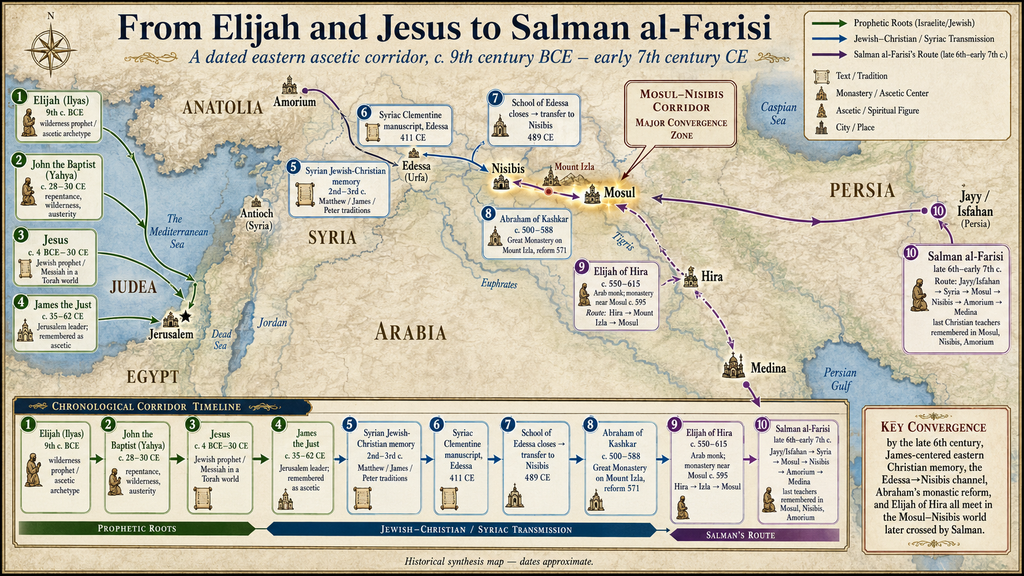
Salmān al-Fārisī’s conversion story preserves one of the most unusual religious itineraries in late-antique Islamic memory:
Persia → Syria → Mosul → Nisibis → Amorium → Arabia
The report of Salmān’s life describes a nearly extinguished ascetic current within Christianity, and several parts of its geography fit what modern scholarship knows about the sixth-century Syriac monastic world with surprising precision.
The strongest convergence is the Mosul–Nisibis corridor, where historians independently locate a major ascetic revival—and where an Arab monk named Elijah of Ḥīra, a disciple of Abraham of Kashkar, moved from Mount Izla near Nisibis to establish a monastery near Mosul in almost exactly the period traditionally associated with Salmān.
We cannot confirm Elijah was Salmān’s teacher, but from this we gloss the kind of ascetic network described in the Salmān tradition was genuinely operating in the exact place and period where the story places it.
1. The Older Ascetic Pattern: Ilyās → Yaḥyā → ʿĪsā
Before Salmān, there is already a recognizable prophetic-ascetic pattern.
Ilyās / Elijah is the wilderness prophet: detached from royal life, dependent upon God, confronting corruption, and living outside normal social structures.
Yaḥyā / John the Baptist appears in the same mold: wilderness, austerity, repentance, independence from wealth, and confrontation with rulers.
Then comes ʿĪsā / Jesus, with itinerancy, fasting, prayer, detachment from possessions, and discipleship centered upon God rather than status.
Christian ascetic and monastic traditions later explicitly looked back to figures such as Elijah and John the Baptist as prototypes of the ascetic life. Scholarship on Syriac Christianity likewise recognizes the strong continuity between biblical prophetic austerity and later Syrian monastic ideals.
So the cautious historical sequence is:
Ilyās → Yaḥyā → ʿĪsā → Christian ascetic tradition
This is not an unbroken named institutional succession. It is a continuity of religious type and practice.
2. Salmān’s Story Begins by Separating Corrupt Christianity from the Righteous Remnant
The long conversion account of Salmān survives in early sīra and hadith material, especially through the Ibn Isḥāq tradition and later collections.
It is safest to call it a widely transmitted early biographical report, rather than simply label the whole account “ṣaḥīḥ” without qualification, because the transmission routes vary and Ibn Isḥāq’s presence in the chain is itself discussed by hadith critics.
The story begins with Salmān in Persia. He encounters Christians at worship, becomes attracted to their religion, and eventually leaves for al-Shām / Syria.
There he serves a bishop.
But the bishop is corrupt.
He collects charity and hoards it for himself.
Salmān eventually exposes him.
This is important because the story does not identify “Christianity” indiscriminately with truth. It immediately distinguishes between:
corrupt religious institution
and
a righteous ascetic remnant
After the corrupt bishop dies, another man replaces him.
Salmān says he had never seen anyone more:
- detached from the world,
- desirous of the Hereafter,
- devoted to worship,
- diligent night and day.
That man becomes the first true master in the succession.
3. The Report Explicitly Says the Old Way Was Almost Gone
When this righteous Syrian teacher is dying, Salmān asks:
Who should I follow after you?
The answer is the key to the entire interpretation.
The teacher says, in substance:
“The people have perished, changed, and abandoned most of what they were upon, except for a man in Mosul.”
The important phrase is that the people had:
changed
and
abandoned most of what they had been upon.
So the story itself presents Salmān’s teachers as a remnant, not as ordinary representatives of the surrounding Christian establishment.
This is the “remaining flame” motif.
Not:
bishop → bishop → bishop
but:
one surviving man → one surviving man → one surviving man
4. Syria → Mosul
Salmān travels to Mosul and finds the man exactly as his Syrian master had described.
He stays with him until he too approaches death.
Again Salmān asks:
Who remains after you?
The Mosul ascetic says he knows no one upon their way except a man in:
Nisibis — Naṣībīn
So the chain becomes:
Syria
↓
Mosul
↓
Nisibis
That would be interesting by itself.
But external history makes it much more interesting.
5. Mosul and Nisibis Really Were a Major Ascetic Corridor
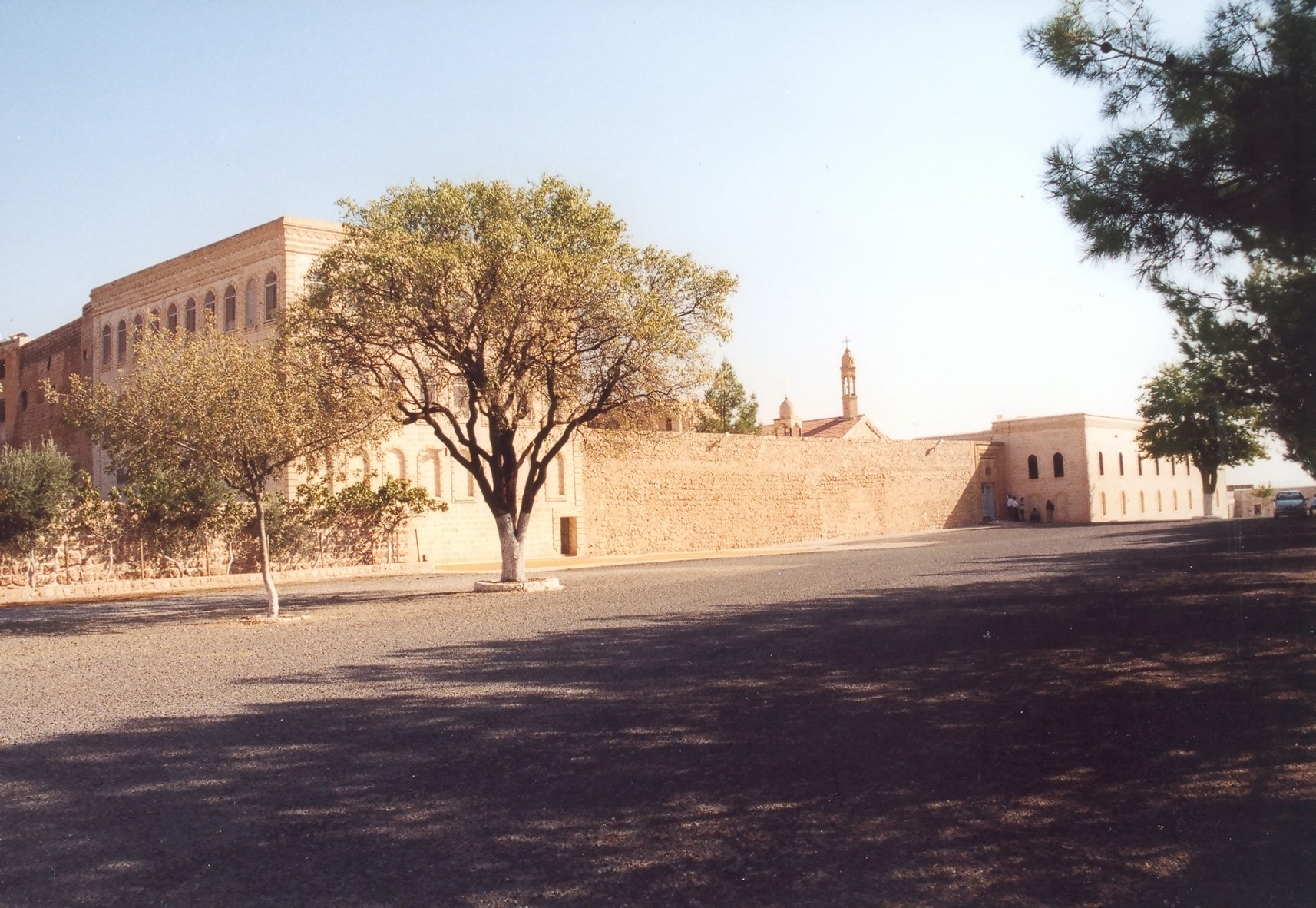
Modern scholarship places a major monastic expansion in northern Mesopotamia during the later sixth century.
A central figure was:
Abraham of Kashkar
Abraham studied at the celebrated School of Nisibis, traveled through Ḥīra, Egypt, and Sinai, and then returned to the Nisibis region.
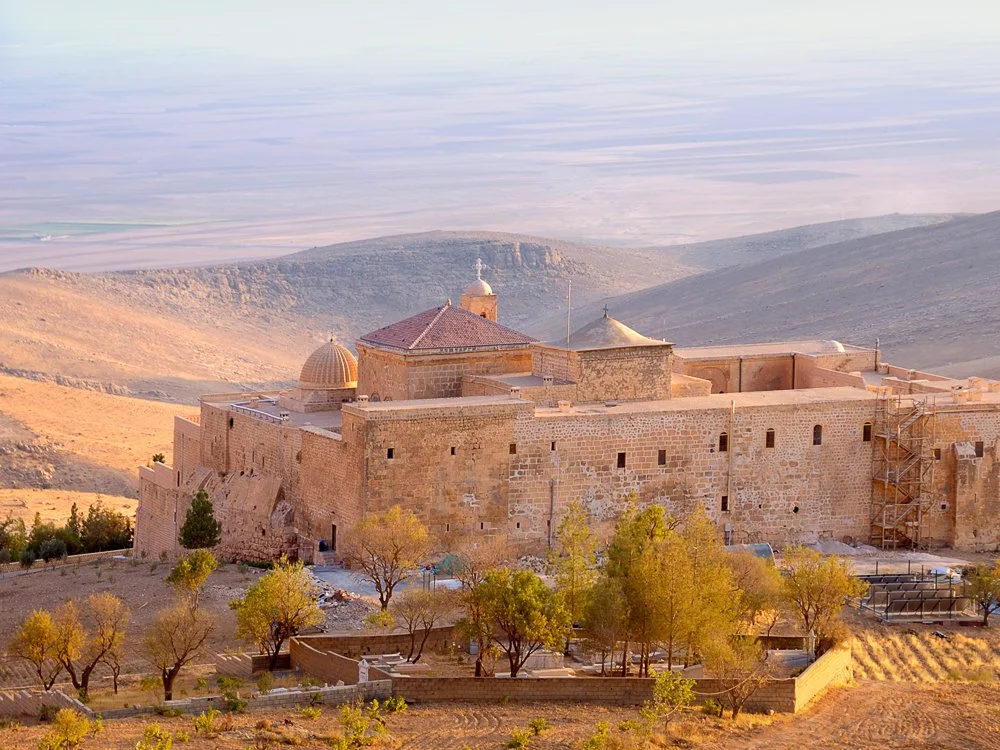
There he established the Great Monastery on Mount Izla, immediately associated with Nisibis.
His monastic reform took shape around 571 CE and emphasized:
poverty, fasting, prayer, vigils, silence, discipline, and detachment from worldly life.
His disciples spread through northern Mesopotamia, especially:
Nisibis, Mount Izla, Sinjar, Adiabene, and the Mosul region.
So when Salmān’s story says:
Mosul → Nisibis
it places him directly inside a historically documented sixth-century ascetic corridor.
6. The Elijah of Ḥīra Convergence
This is the strongest external convergence in the entire reconstruction.
One of Abraham of Kashkar’s disciples was:
Elijah of Ḥīra — Mār Eliyā
Scholarly Syriac prosopography places him approximately in the period:
c. 550–615 CE
He was:
- an Arab,
- associated with al-Ḥīra,
- a disciple of Abraham of Kashkar,
- trained in the Mount Izla / Nisibis monastic environment,
- and later established a monastery near Mosul.
His route was therefore:
Ḥīra → Mount Izla / Nisibis → Mosul
Salmān’s traditional route through the same stage is:
Syria → Mosul → Nisibis
The overlap is striking.
An Arab ascetic named Elijah, moving between Nisibis and Mosul, exists in almost exactly the same period and geographical corridor as Salmān’s unnamed ascetic teachers.
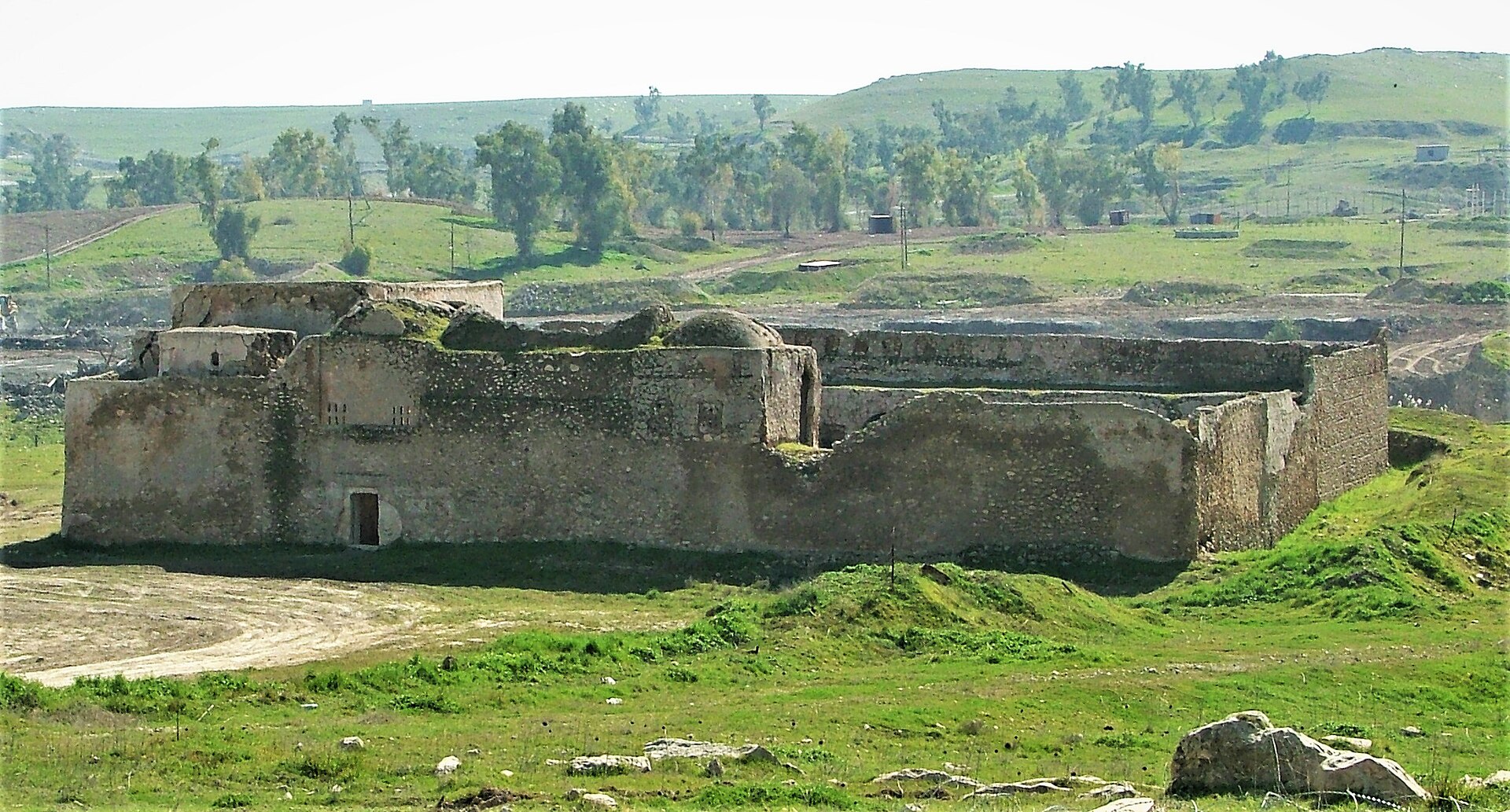
His monastery, Dayr Mār Eliyā, is traditionally dated to around 595 CE.
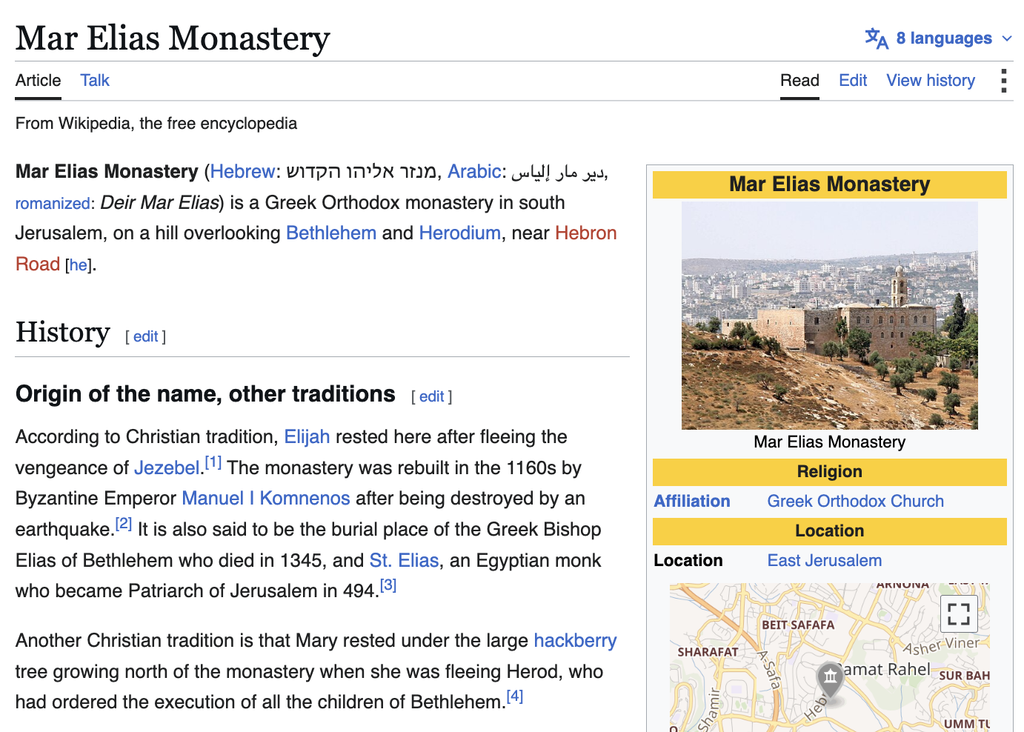
That gives us something much stronger than a vague thematic resemblance.
It gives us:
same era
+
same region
+
same ascetic network
+
an Elijah-named Arab monk
+
movement between Nisibis and Mosul
What we cannot say is:
Elijah of Ḥīra was Salmān’s teacher.
There is no surviving evidence proving that identification.
What we can say is:
The Salmān report places an ascetic succession precisely where a real late-sixth-century ascetic network existed, and one of that network’s identifiable Arab monks was Mār Eliyā, moving through the same Mosul–Nisibis corridor.
That is a genuine historical convergence.
7. Nisibis Was Not a Random Choice
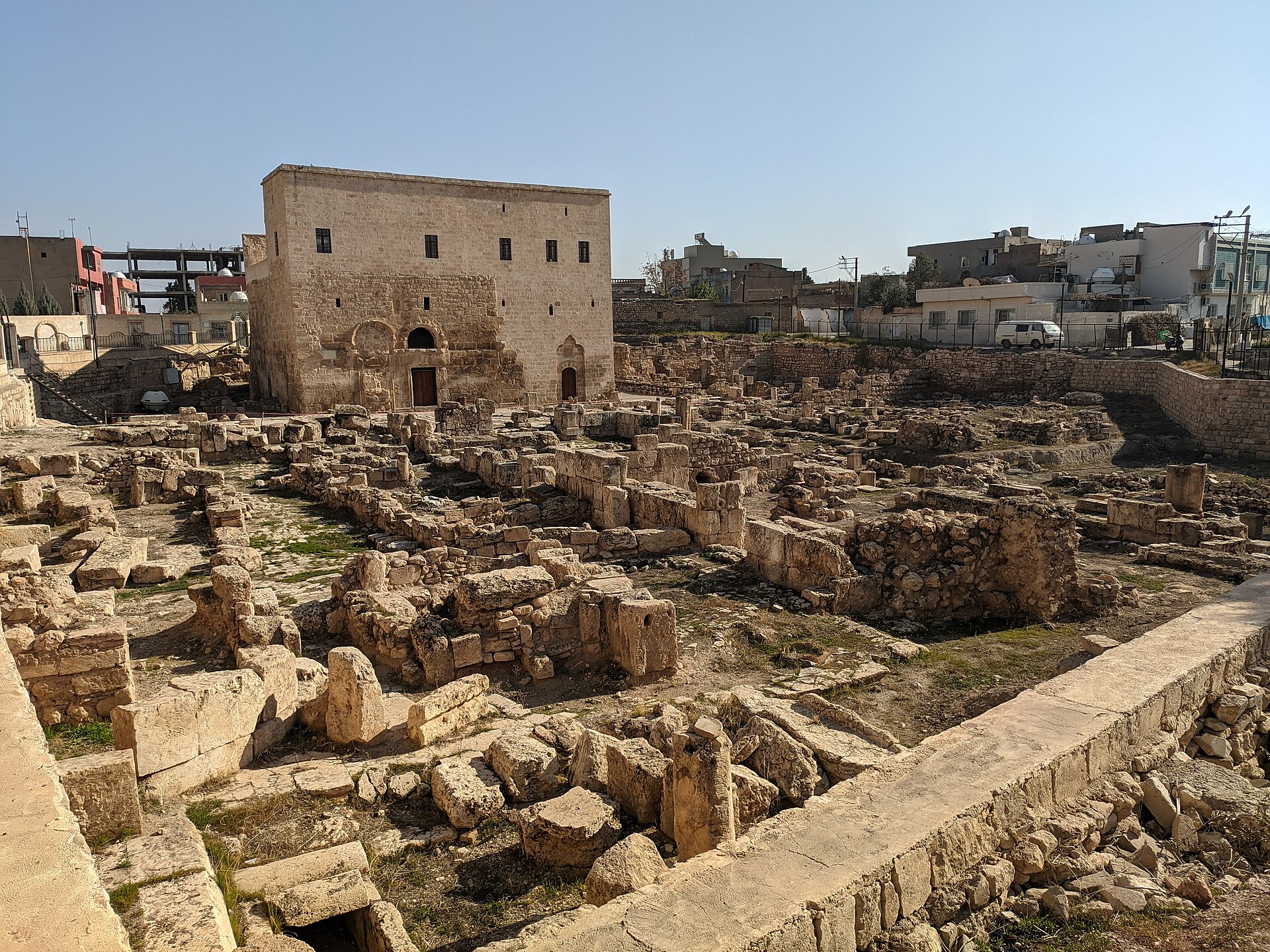
Nisibis was one of the great intellectual centers of Syriac Christianity.
After the closure of the school at Edessa in 489, Nisibis became a major center of East-Syriac theological and scholarly life.
By the sixth century, it was also tied closely to the monastic world of Mount Izla.
So Salmān’s report does not merely send him to “another Christian city.”
It sends him to one of the most important Christian ascetic and intellectual centers in the entire region.
The Nisibis teacher is described as being:
“upon the same matter”
as the previous teachers.
Then he too dies.
And again Salmān asks:
Who remains?
8. Nisibis → Amorium
The Nisibis master tells Salmān that he knows only one man remaining upon their way:
a man in Amorium.
This is where the itinerary becomes especially important.
Amorium was deep in Byzantine Anatolia.
It was not part of the ordinary Mosul–Nisibis East-Syriac corridor.
It was a real Byzantine episcopal city with substantial Christian architecture and ecclesiastical life in late antiquity.
Archaeology confirms major Christian occupation there in the fifth and sixth centuries, including a basilica and baptistery.
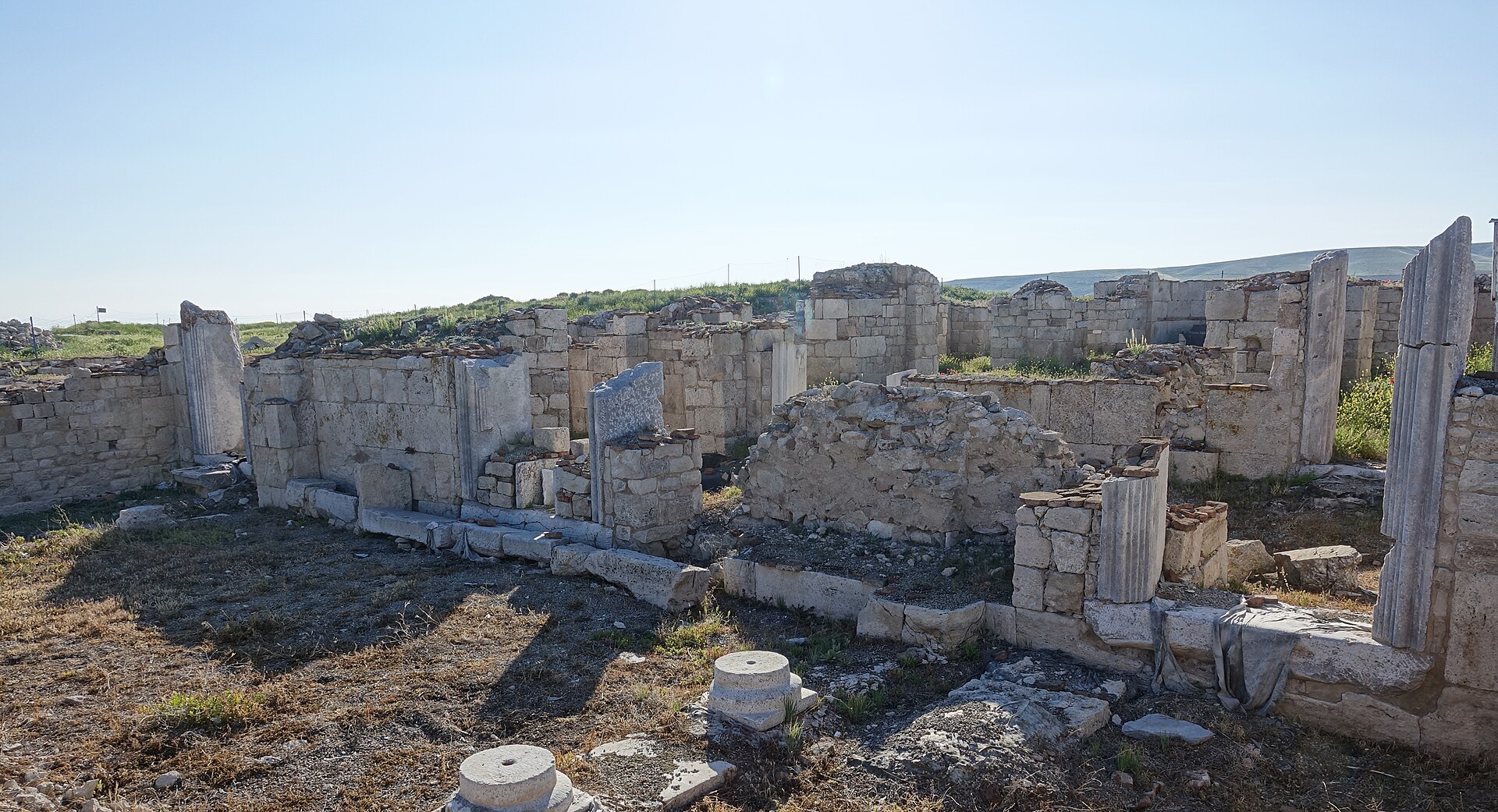
This matters because Amorium is the least obvious destination in the story.
Syria, Mosul, and Nisibis were familiar religious centers.
Amorium is different.
A later Iraqi storyteller could easily know Mosul and Nisibis.
But reaching for a specific Christian city in inland Byzantine Anatolia is a more unusual detail.
That does not prove authenticity.
But it is the itinerary’s strongest geographical pressure point.
9. Amorium Also Shows This Was Not Simply One Denomination
The move from Nisibis to Amorium creates another important result.
Mosul and Nisibis were deeply connected with East-Syriac Christianity.
Amorium belonged to the Byzantine ecclesiastical world.
Yet Salmān’s account insists that the same “matter” survives in one man there.
That argues against a simple reconstruction like:
“These were four bishops of the same denomination.”
The narrative fits better if we understand these men as:
scattered ascetics sharing a religious ideal across institutional boundaries.
The report itself describes them precisely that way.
One righteous man.
Then another.
Then another.
Not an official clerical succession.
10. The Final Christian Says No Successor Remains
When the Amorium ascetic is dying, Salmān asks the same question one final time:
Whom should I follow after you?
This time the answer changes completely.
The teacher says:
“By Allah, I do not know anyone among mankind remaining today upon what we were upon.”
The flame has reached its last visible carrier.
And instead of naming another Christian teacher, he tells Salmān that the time has come for a prophet who will arise:
upon the religion of Abraham
among the Arabs.
He gives Salmān signs:
- the prophet will migrate to a land of palm trees,
- he will refuse charity,
- accept gifts,
- and bear the seal of prophecy between his shoulders.
So the sequence becomes:
righteous Syrian ascetic
↓
Mosul ascetic
↓
Nisibis ascetic
↓
Amorium ascetic
↓
“No one remains upon what we were upon.”
↓
Await the prophet of Abraham
The story does not simply say Salmān changed religions.
It portrays him as being transferred from the last remnant of one prophetic current to the new Abrahamic prophet.
11. Salmān Tests Muhammad Against the Final Master’s Signs
When Salmān eventually reaches Yathrib, he does not immediately accept Muhammad.
He tests the signs.
First:
charity
Muhammad refuses it.
Then:
gift
Muhammad accepts it.
Finally:
the seal of prophecy
Salmān sees it between Muhammad’s shoulders.
Only then does he accept him.
So narratively this is not accidental conversion.
It is:
instruction → test → recognition
The final Christian teacher gives the criteria.
Salmān verifies them.
Then he joins Muhammad.
12. What the Qurʾān Says About Righteous Christian Ascetics
The Qurʾān never names Salmān’s four teachers individually.
That claim should not be made.
But it does explicitly recognize a righteous class within Christianity.
Qurʾān 5:82
“You will surely find the nearest of them in affection to the believers those who say, ‘We are Christians.’ That is because among them are priests and monks, and because they are not arrogant.”
The Arabic is explicit:
قِسِّيسِينَ وَرُهْبَانًا
priests and monks
This is important because the Qurʾān does not flatten Christians into one category.
It recognizes righteous religious ascetics among them.
13. The Qurʾān Also Describes Righteous People of the Book Praying at Night
This passage fits Salmān’s first righteous teacher particularly well.
Qurʾān 3:113–115
“They are not all alike. Among the People of the Book is an upright community, reciting the signs of God throughout the night while prostrating.”
“They believe in God and the Last Day, command what is right, forbid what is wrong, and hasten to good works. Those are among the righteous.”
“Whatever good they do will never be denied them.”
The opening words are crucial:
لَيْسُوا سَوَاءً
“They are not all alike.”
That distinction is exactly what Salmān’s story requires.
The corrupt bishop and the righteous ascetic are not alike.
The wider religious world may have changed, but a righteous remnant remains.
And the Qurʾān describes that remnant as:
night worshippers
prostrating
believing in God and the Last Day
doing righteousness
That is strikingly close to Salmān’s description of his Syrian teacher as a man devoted to worship:
night and day
14. Qurʾān 57:27 and Christian Monasticism
Qurʾān 57:27 also directly mentions:
رَهْبَانِيَّة — rahbāniyya
Christian monastic or ascetic life.
The verse says that the followers of Jesus were given:
compassion and mercy
and that they introduced monasticism.
The wording is:
“they innovated it; We did not prescribe it for them”
while also saying:
“seeking the pleasure of God.”
Classical interpretation divides over where the criticism falls.
One reading emphasizes that inventing monasticism itself was not divinely prescribed.
Another emphasizes that they later failed to observe properly what they had undertaken.
Both readings should be acknowledged.
The safe conclusion is:
The Qurʾān recognizes a genuine Christian ascetic phenomenon, acknowledges that it could be undertaken seeking God’s pleasure, yet criticizes its lack of divine prescription and/or the failure of later practitioners to fulfill it correctly.
That fits the larger distinction:
ascetic sincerity can survive even when religious institutions change or decline.
15. The Historical Argument Should Be Modest but Strong
The evidence does not prove:
- that the four teachers can be named,
- that they were formal successors of Jesus,
- that Elijah of Ḥīra was Salmān’s Mosul teacher,
- or that they all belonged to one non-Trinitarian sect.
Those claims go beyond the evidence.
What the evidence does show is:
- Salmān’s story explicitly describes a shrinking religious remnant.
- Its central geography runs through major sixth-century ascetic centers.
- Nisibis and Mount Izla really were undergoing a major monastic revival.
- Abraham of Kashkar’s disciples really spread through northern Mesopotamia.
- An Arab monk named Elijah of Ḥīra, active c. 550–615, really moved from the Nisibis/Izla world to establish a monastery near Mosul.
- The story’s final Christian destination, Amorium, was a real Byzantine Christian center and is the least obvious geographical detail in the itinerary.
- The Qurʾān independently recognizes righteous priests, monks, and night-praying People of the Book.
That is enough to say the report sits naturally inside the religious world it claims to describe.
16. Salmān Reaches Islam but Does Not Abandon the Ascetic Life
The final symmetry is in Salmān himself.
He does not enter Islam and become the opposite of the men who trained him.
He continues to live with extraordinary simplicity.
Traditions remember him as holding authority in al-Madāʾin, yet rejecting luxury and living from manual labor.
He is described as weaving or working with his hands and giving away much of what came to him.
One famous report says he initially refused even to have a proper house.
When someone finally offered to build one suitable to him, the description was:
When you stand, your head will reach the roof; when you stretch out your legs, your feet will reach the wall.
And Salmān agreed.
So even as a Muslim governor, his ideal dwelling remained almost no more than a bodily shelter.
His asceticism was not absolute rejection of the body or family, however.
In the famous report involving Abū al-Dardāʾ, Salmān insists:
Your Lord has a right over you, your body has a right over you, and your family has a right over you.
The Prophet is reported to have affirmed:
“Salmān has spoken the truth.”
So Salmān’s final form of asceticism is disciplined rather than monastic self-denial.
He remains:
poor in spirit
simple in material life
devoted to God
working with his hands
detached from political status
but balanced in bodily and family obligations
until the end of his life.
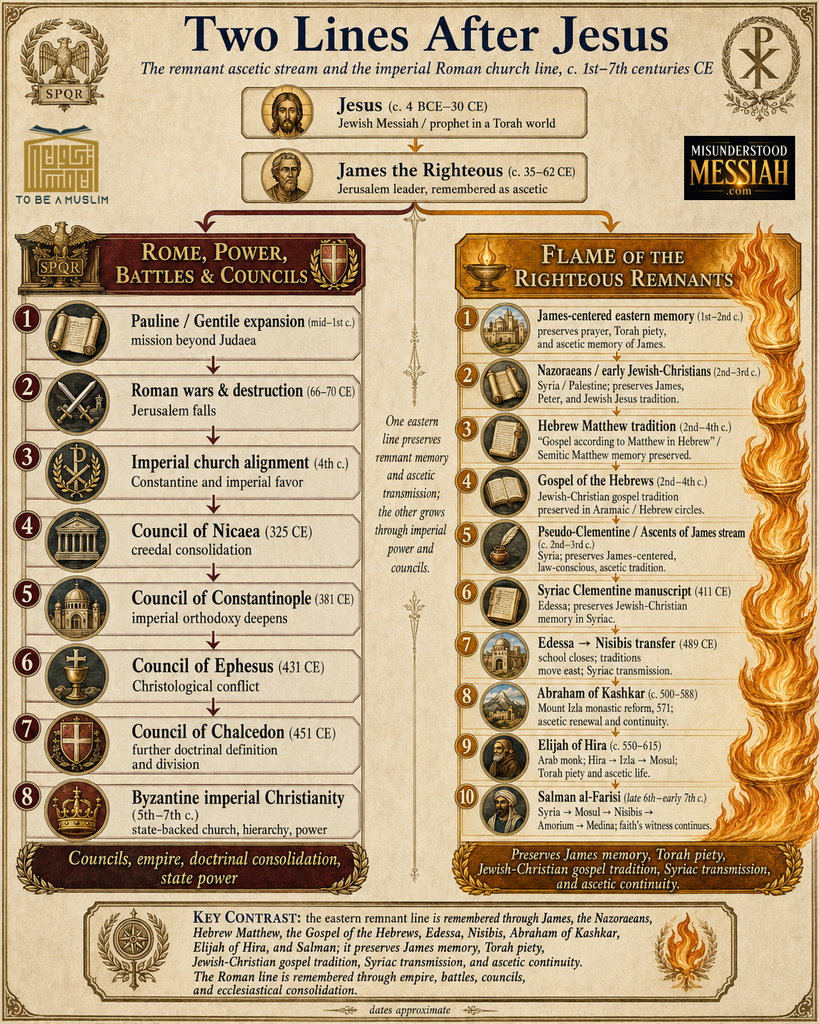
The Chain
The most defensible reconstruction is therefore:
Ilyās
prophetic wilderness asceticism
↓
Yaḥyā
repentance, austerity, wilderness
↓
ʿĪsā
itinerancy, prayer, fasting, detachment
↓
Syriac Christian ascetic tradition
↓
righteous Syrian master
↓
Mosul master
↓
Nisibis master
↓
Amorium master
↓
“I know no one remaining upon what we were upon.”
↓
Muhammad
the prophet of Abraham whom the final master tells Salmān to seek
↓
Salmān al-Fārisī
who enters Islam and carries the ascetic flame with him until death
And inside that chain stands the most remarkable external convergence:
In the very Mosul–Nisibis corridor where Salmān’s account places the fading ascetic succession, a sixth-century Arab monk named Elijah of Ḥīra, disciple of Abraham of Kashkar, was moving from Mount Izla near Nisibis to establish a monastery near Mosul around the same period.
That is not proof of identity.
It is something more useful historically:
an independently documented ascetic world that looks exactly like the world Salmān’s report says was there.
The Qurʾān gathers the four prophetic names at the heart of this ascetic lineage into a single verse:
“And Zechariah and John and Jesus and Elijah—all were among the righteous.”
— Qurʾān 6:85