
Related: Gabriel: The Angel of Revelation Across the Three Scriptures
1. Overview
Both the Bible and the Qurʾān use “spirit” language to describe divine activity.
In Christian theology, the Holy Spirit is a distinct divine person; in Islamic interpretation, Rūḥ al-Qudus (the Holy Spirit) refers to the angel Gabriel (Jibrīl).
A cross-textual reading shows that the Hebrew Bible, New Testament, and Qurʾān often use spirit and angel terminology interchangeably as functional titles, not necessarily as personal names.
2. Linguistic and Conceptual Background
- Hebrew and Greek Usage
- Ruach (רוּחַ) / pneuma (πνεῦμα): “breath,” “wind,” or “spirit.”
- Qedoshim (קְדֹשִׁים): “holy ones,” a common designation for heavenly beings.
- Malʾākh (מַלְאָךְ): “messenger,” translated as “angel.”
Angels are described as “spirits” (ruḥot) in Psalm 104:4, quoted in Hebrews 1:7.
- Arabic Usage
- Rūḥ al-Qudus = “Spirit of Holiness,” Rūḥ al-Amīn = “Faithful Spirit.”
Both titles appear in contexts describing revelation, not independent divinity.
- Rūḥ al-Qudus = “Spirit of Holiness,” Rūḥ al-Amīn = “Faithful Spirit.”
3. Angelic Designations as ‘Spirit’ and ‘Holy’
In the Hebrew Bible
- Psalm 104:4: “He makes his angels spirits.”
- Zechariah 6:5: “These are the four spirits of heaven.”
- Psalm 89:5, 7: “The heavens praise You in the assembly of the holy ones.”
→ Ruach and Qedoshim together characterize the angelic host.
In Jewish Tradition
- 1 Enoch 20:7: “Gabriel, one of the holy angels.”
- Rabbinic texts (e.g., Yoma 77a) associate Gabriel with the “man in linen” from Ezekiel 9–10, an emissary from God’s holy presence.
→ Gabriel is described explicitly as a holy angel—malʾach ha-qodesh.
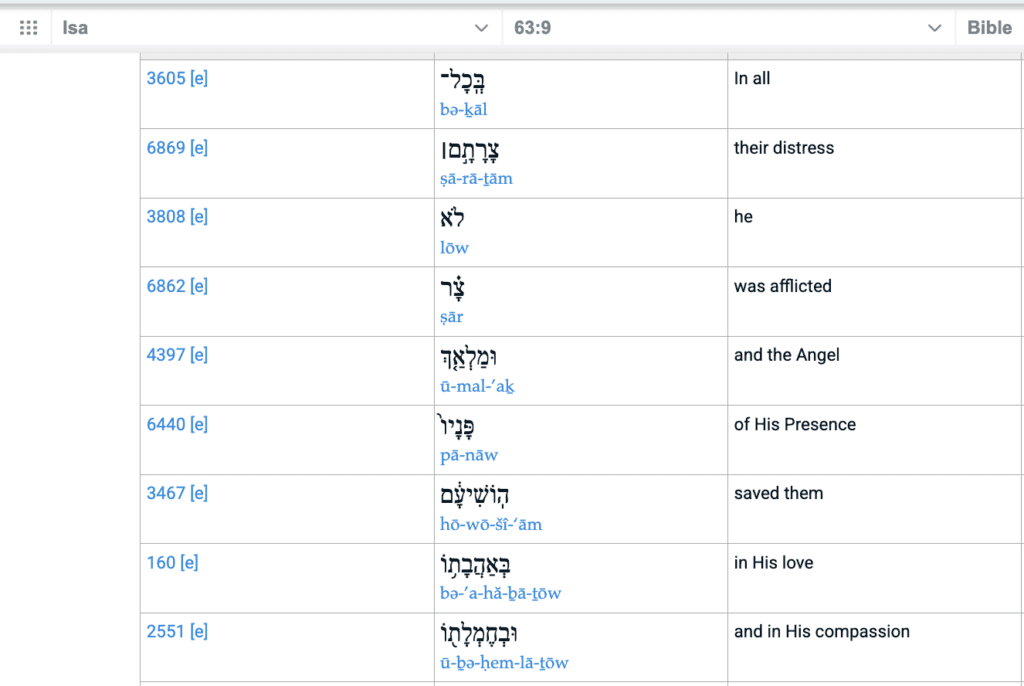
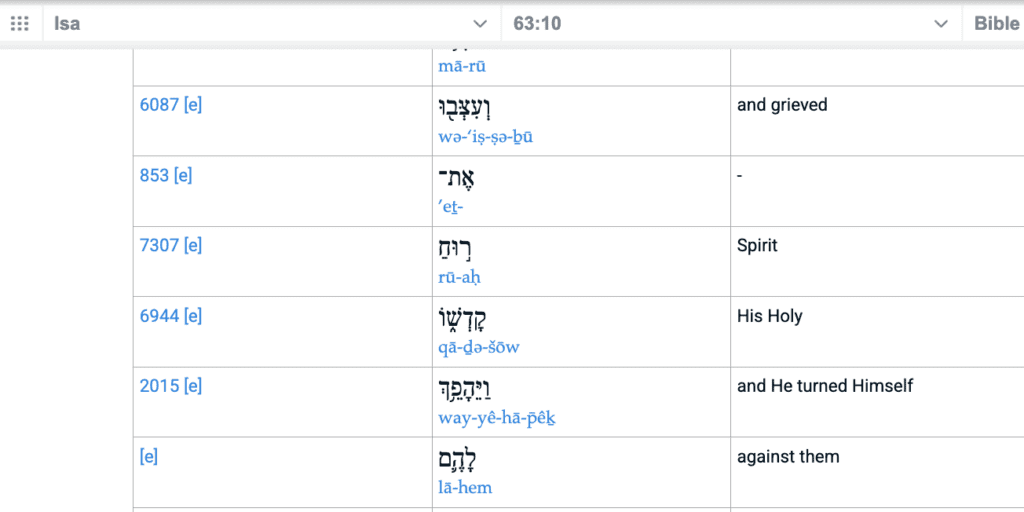
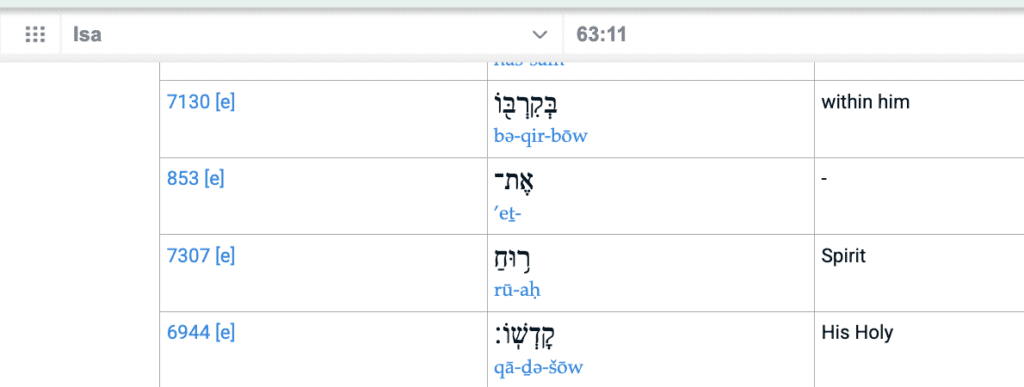
4. Isaiah 63:9–11 — Angel and Spirit in One Context
This passage links the “angel of His presence” (malʾach pānāv) with the “Holy Spirit” (ruach qodsho):
- The angel saves and redeems (v. 9).
- Israel grieves the Holy Spirit (v. 10).
- God places His Holy Spirit among them (v. 11).
Jewish interpretation often identifies the angel of His presence as Gabriel or Michael. The pairing suggests that the “Holy Spirit” operates through the same angelic agent.
9 In all their affliction he was afflicted, and the angel of his presence saved them: in his love and in his pity he redeemed them; and he bare them, and carried them all the days of old.
10 But they rebelled, and vexed his Holy Spirit: therefore he was turned to be their enemy, and he fought against them.
11 Then he remembered the days of old, Moses, and his people, saying, Where is he that brought them up out of the sea with the shepherd of his flock? where is he that put his Holy Spirit within him?
5. The New Testament Account
In Luke 1:26–35, the angel Gabriel announces to Mary that “the Holy Spirit will come upon you.”
Rather than proving two separate beings, this mirrors biblical idiom where a divine messenger speaks of God’s power in the third person (cf. Genesis 19:13).
Angels execute divine will yet attribute the act to God’s Spirit—a linguistic convention of agency, not evidence of distinct divine persons.
6. Qurʾānic Parallels
Cross-referencing Qurʾānic passages aligns the terms:
- 19:17–19: “We sent to her Our Spirit… ‘I am a messenger of your Lord.’”
- 2:87, 5:110: Jesus strengthened by the Holy Spirit.
- 16:102; 26:193–194: Revelation brought by the Faithful Spirit.
Early Muslim commentators (e.g., al-Baiḍāwī, al-Zamakhsharī, al-Bukhārī) identified Rūḥ al-Qudus with Gabriel, interpreting the phrase as a functional title—the sacred agent of revelation.
7. Functional vs. Personal Titles
Semitic texts often use descriptive titles for roles rather than personal names:
| Function | Title | Example |
|---|---|---|
| Messenger | Malʾākh YHWH | “Angel of the Lord” |
| Representative Presence | Malʾākh Pānāv | “Angel of His Presence” |
| Divine Agent of Revelation | Rūḥ al-Qudus / Ruach Qodesh | “Holy Spirit” |
Gabriel, when acting as God’s revelatory agent, occupies this Rūḥ Qodesh role.
8. Comparative Summary
| Theme | Hebrew Bible | New Testament | Qurʾān |
|---|---|---|---|
| Angels as “spirits” | Psalm 104:4 | Hebrews 1:7 | — |
| “Holy ones” as angels | Psalm 89 | — | — |
| Angel of Presence = Holy Spirit | Isaiah 63:9–11 | — | — |
| Named messenger | Gabriel (Daniel 8–9) | Gabriel (Luke 1) | Jibrīl (2:97) |
| “Spirit” as agent of revelation | Prophets inspired by Ruach YHWH | “Holy Spirit” empowers prophets | Rūḥ al-Qudus brings revelation |
The overlap suggests continuity in the concept of a divine messenger-spirit functioning between God and humanity.
9. Conclusion
Across Jewish, Christian, and Islamic scripture, “spirit” (ruach/pneuma/ruh) language often describes function, not identity.
Gabriel embodies this role as the divine messenger through whom revelation is delivered.
While Christian theology later systematized the “Holy Spirit” as a distinct hypostasis, earlier Semitic usage treated spirit of holiness as a description of divine agency rather than a separate person.
Related: Gabriel: The Angel of Revelation Across the Three Scriptures