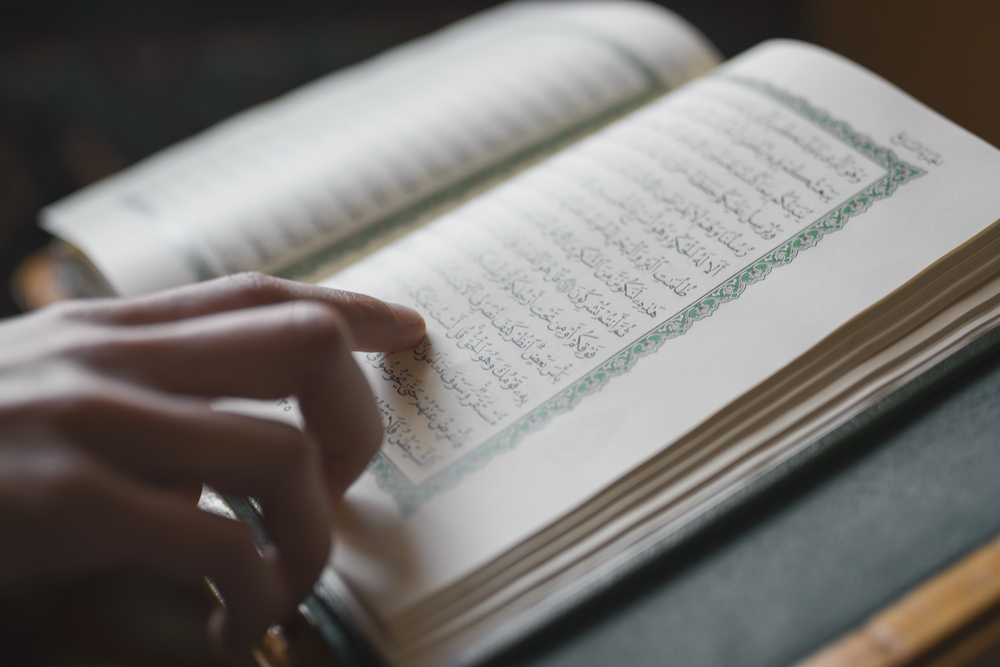
One of the most common claims made against the Qur’an is that Caliph ʿUthmān ibn ʿAffān “created” a new Qur’an and then destroyed the evidence. It sounds dramatic. It also collapses the moment the actual Muslim reports are read carefully, because the very narration used to make the charge describes the opposite of invention. It describes quality control.
The Charge, and Where It Comes From
The early Islamic record does not present ʿUthmān as an author, an editor, or an inventor of revelation. It presents him as a head of state responding to a concrete public problem: Muslims in different provinces were reciting in different dialectal forms and beginning to dispute over them. His response was not to compose a new text. It was to standardize the community upon the written record that already existed.
The whole case rests on one authentic report, and it is worth being precise about it.
The Core Report: Ṣaḥīḥ al-Bukhārī 4987
The decisive narration is in Ṣaḥīḥ al-Bukhārī (no. 4987), on the authority of Anas ibn Mālik. Its details matter, so here they are in order.
During ʿUthmān’s caliphate, the armies of Sham (Syria) and Iraq were on campaign to conquer Armenia and Azerbaijan. Fighting side by side, soldiers from different regions noticed that they were reciting the Qur’an in different ways, and the disagreement was sharp enough to alarm the Companion Ḥudhayfah ibn al-Yamān. He rode to ʿUthmān and said, in effect: save this nation before they differ over the Book the way the Jews and Christians differed over their scriptures before them.
ʿUthmān acted. He sent to Ḥafṣah bint ʿUmar, the widow of the Prophet ﷺ, for the ṣuḥuf — the written sheets of the Qur’an already in her custody. These were not private notes or a personal codex. They were the official collection prepared under the first caliph, Abū Bakr, with Zayd ibn Thābit leading the work after the Battle of Yamāmah, where a number of the ḥuffāẓ (those who had memorized the Qur’an) had been killed. That collection had passed from Abū Bakr to ʿUmar, and then into Ḥafṣah’s keeping.
ʿUthmān then appointed a committee of four: Zayd ibn Thābit, ʿAbdullāh ibn al-Zubayr, Saʿīd ibn al-ʿĀṣ, and ʿAbd al-Raḥmān ibn al-Ḥārith ibn Hishām. Their task was to copy the ṣuḥuf into standard maṣāḥif. And ʿUthmān gave them one governing rule: if the committee ever disagreed with Zayd over an Arabic expression in the Qur’an, they were to write it in the dialect of Quraysh, because the Qur’an was revealed in that tongue.
That rule is the hinge of the entire matter. The dispute being resolved was not about doctrine or content. It was about written form and recitational unity across dialects.
“Corrected” Meant Spelling, Not Substance
There is a concrete, recorded example of exactly the kind of disagreement the Qurayshī rule was meant to settle. The committee differed over how to write one word — whether the final letter of al-tābūt (the ark) should be written tāʾ or hāʾ (tābūt vs. tābūh). The Quraysh members held one spelling; Zayd held the other. The matter went to ʿUthmān, who ruled: write it al-tābūt, for the Qur’an came down in the language of Quraysh.
This is the texture of the whole project. The “differences” being resolved were at the level of orthography — how to spell a word whose recitation everyone already agreed on — not competing versions of the message. That is what a serious manuscript standardization looks like, and it is the opposite of someone secretly rewriting scripture.
What ʿUthmān Did Next
When the official copies were complete, ʿUthmān returned the original ṣuḥuf to Ḥafṣah. He did not destroy the master. He gave it back to its custodian.
He then sent one official copy to each major Muslim province and ordered that other Qur’anic materials in circulation be removed. Critics weaponize this last step — the burning — but its purpose is plain from the context. It was not to erase the Qur’an. It was to prevent competing private notebooks, regional spellings, and partial codices from hardening into sources of sectarian conflict, which is precisely the danger Ḥudhayfah had warned of. The measure was not opposed; the reports record that the Companions present approved of it, and ʿAlī ibn Abī Ṭālib is reported to have said that had he been in charge, he would have done the same.
So the sequence, start to finish, is this: an authentic written collection already existed; a public problem arose; a committee of named Companions copied the existing text; a single dialectal-spelling rule was applied; the master was returned to its keeper; official copies were distributed; and conflicting private materials were withdrawn to protect unity.
Why the Argument Backfires
Read in full, the Bukhārī report is not evidence of corruption. It is a description of a preservation system. It contains, in one narration, every feature you would want in a credible transmission process:
- an existing official written source (Ḥafṣah’s ṣuḥuf),
- named, accountable participants (a four-man Companion committee),
- a stated, narrow standardization rule (Qurayshī spelling on dialectal differences),
- a worked example of that rule in action (the tābūt spelling),
- the preservation of the original (returned to Ḥafṣah, not destroyed),
- public distribution and public consent.
This was not a secret literary project carried out by one man behind closed doors. It was a state-backed, publicly witnessed effort, conducted in a community still full of living memorizers who would have recognized any tampering instantly.
So what actually happened under ʿUthmān?
He did not create a new Qur’an. He did not rewrite revelation. He did not replace the Prophet’s message with his own. He took the existing official ṣuḥuf, formed a committee of Companions, copied the text, resolved dialectal spelling according to Qurayshī Arabic, returned the original, distributed official copies, and withdrew conflicting private materials to preserve unity.
A Careful Summary
Ṣaḥīḥ al-Bukhārī (4987) establishes that ʿUthmān’s official muṣḥaf was copied from the earlier ṣuḥuf preserved with Ḥafṣah — itself the collection made under Abū Bakr. The standardization concerned written form and dialect, not content, as the tābūt spelling case shows directly. The master sheets were returned, not destroyed. Copies were checked and distributed publicly, with the Companions’ knowledge and consent.
The picture is not one of invention or corruption. It is one of verification: an official edition prepared from a primary written source, standardized in spelling, and circulated under public scrutiny.
That is not a scandal. That is preservation.
Note on sources: The argument here rests entirely on the authentic (ṣaḥīḥ) narration of Anas ibn Mālik in Ṣaḥīḥ al-Bukhārī, no. 4987, and the related reports in the same chapter (Kitāb Faḍāʾil al-Qurʾān) establishing the Abū Bakr → ʿUmar → Ḥafṣah custody of the original collection. Some later historical works mention parchments held by ʿĀʾishah being consulted during the copying; those reports are of weaker authentication and are deliberately not relied upon here. The case does not need them. The Ḥafṣah/Bukhārī chain carries it on its own.