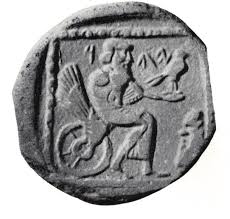
You have been looking for Uzair? Guess what. For over two thousand years he has been hidden inside the most sacred prayer in Judaism, recited three times every single day. And nobody told you.
The Verse the Critics Mock
Surah At-Tawbah 9:30 — “The Jews say Uzair is the son of God.” Critics have mocked this verse for centuries. No Jew believes that, they say. The Quran invented a doctrine no Jew ever held.
But the Prophet ﷺ said, in Sahih al-Bukhari, that on the Day of Judgment, when the Jews are called, they will say: we used to worship Uzair, the son of Allah. This is not a Quranic aside. This is a scene at the most consequential reckoning in human history. If Uzair were a fringe belief, it would be passing strange to appear there.
So we went looking.
The Root: Ayin-Zayin-Resh
Uzair is Arabic. Root ʿ-z-r (ayin-zayin-resh). To help. To aid. And the form is a diminutive. Uzair means the lesser helper — the smaller version of something greater.
So the question becomes: what is the greater version that Uzair diminishes?
Ezer Is Yahweh’s Defining Title
Scholars have counted every occurrence of the noun ezer in the Hebrew Old Testament. It appears twenty-one times. Sixteen of those twenty-one refer exclusively to Yahweh. Not to a king. Not to an angel. Not to a nation. To Yahweh.
Ezer is Yahweh’s defining function in scripture, and it travels with a companion word throughout the Psalms. Psalm 33:20 — He is our ezer and our magen. Our helper and our shield. Warrior language. Military language. A rescuer who runs toward the battle.
When Yahweh delivered Moses from Pharaoh’s sword, Moses named his son Eliezer — my God is my ezer. The Jewish people encoded ezer into their culture so thoroughly you can trace it across the entire biblical record by following the names: Eliezer. Eleazar. Azariah. Azriel. Abiezer. Ahiezer. Ezra. Ezri. Priests, prophets, generals, scribes — every one built on the same root.
And Samuel carved it in stone. After Yahweh delivered Israel in battle, Samuel erected a monument and named it Ebenezer. Even-ezer. Stone of Help. A military monument to Yahweh the warrior-helper, literally carved in stone.
Azaryahu Encoded It Himself
Ezra the scribe — the man most scholars connect to the Quranic Uzair — carries a name that is likely a shortened form of the Hebrew Azaryahu: Yah helps. Yah is Yahweh. Ezra’s very name means Yahweh is the ezer.
The Talmud, Megillah 17b, records that it was Ezra himself, together with the Men of the Great Assembly, who composed the Amidah — the standing prayer, the eighteen benedictions that form the spine of Jewish liturgy, recited three times every single day, plus Shabbat, plus holidays, for over two thousand years.
And in the very first blessing of that prayer, in the closing seal, Azaryahu encoded Yahweh’s title in plain sight:
Melech. Ozer. Moshia. Umagen.
King. Helper. Savior. Shield.
Notice the form he chose. Not the static noun ezer — the active participle, ozeir. The One who is actively helping, right now, in this moment and every moment. The man whose name encoded Yahweh-as-ezer built the living, present-tense form of that same word into the most sacred Jewish prayer in history.
Same root. Ayin-zayin-resh. Ozeir. And Uzair is the Arabic diminutive of the identical root. The lesser helper. The little Ozeir.
This is not a hidden sect. Not a buried scroll. Not a secret whispered between initiates. This is daily public observance — said out loud, in synagogues, by millions of Jews, every morning, every afternoon, every evening, from the time of Ezra until this very day. The name was never hidden. It has been hiding in plain sight.
The Helper Who Found No Helper
Isaiah 63:5 — Yahweh speaks in the first person: I looked, and there was no ozeir. No helper found among men. I was astonished. So my own arm brought salvation.
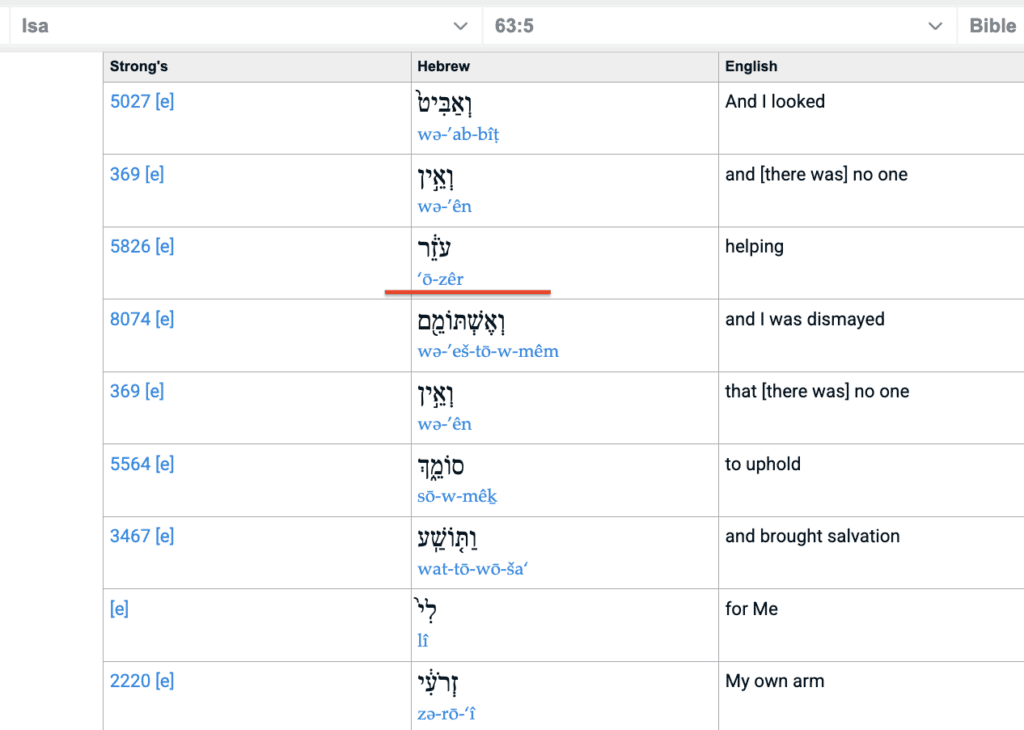
The Ozeir looked for a human vessel. Found none. And moved in Himself.
Zechariah 14:3 completes the picture: Then Yahweh will go out and fight against those nations, as He fights on a day of battle. Yahweh going to war personally — because no human helper could be found.
And the rabbis saw it. Talmud Sanhedrin 98a — Rabbi Yochanan quotes that same Isaiah verse and teaches: the Messiah comes only when God looks across all of humanity and finds no ozeir. That is the trigger. That is the moment.
Two Communities, Two Corruptions, One Verse
The Christians read that same Isaiah 63 and drew their own conclusion: no human helper could ever suffice, because the role required more than a man. Only God Himself could fill the vacuum. So God sent His son. Al-Maseeh became ibn Allah — the messianic ozeir, divinized.
The Jews had already made a different move, centuries earlier. Go to Deuteronomy 32:8–9 — not the standard Bible, the Dead Sea Scrolls, fragment 4QDeut^q. When Elyon divided the nations among the Bene Elohim, the sons of God — Yahweh received Israel as His portion. In the oldest text, Yahweh stands among the sons. Psalm 82 confirms the framework: You are gods, sons of the Most High, all of you.
The lesser helper. Son of the Most High. Uzair ibn Allah.
Two communities. Two corruptions. Both rooted in the same scriptures. And the Quran puts both on blast, side by side, in a single verse — Surah 9:30: The Jews say Uzair is the son of God, and the Christians say the Messiah is the son of God.
The Quran Did Not Invent This. It Recorded It.
For centuries the critics said no Jew ever called anyone “Uzair, son of God.” But the title was there all along — sealed into the first blessing of the Amidah by the hand of Azaryahu himself, spoken aloud three times a day for two thousand years, waiting for someone to listen.
Melech. Ozer. Moshia. Umagen.
Imagine that.