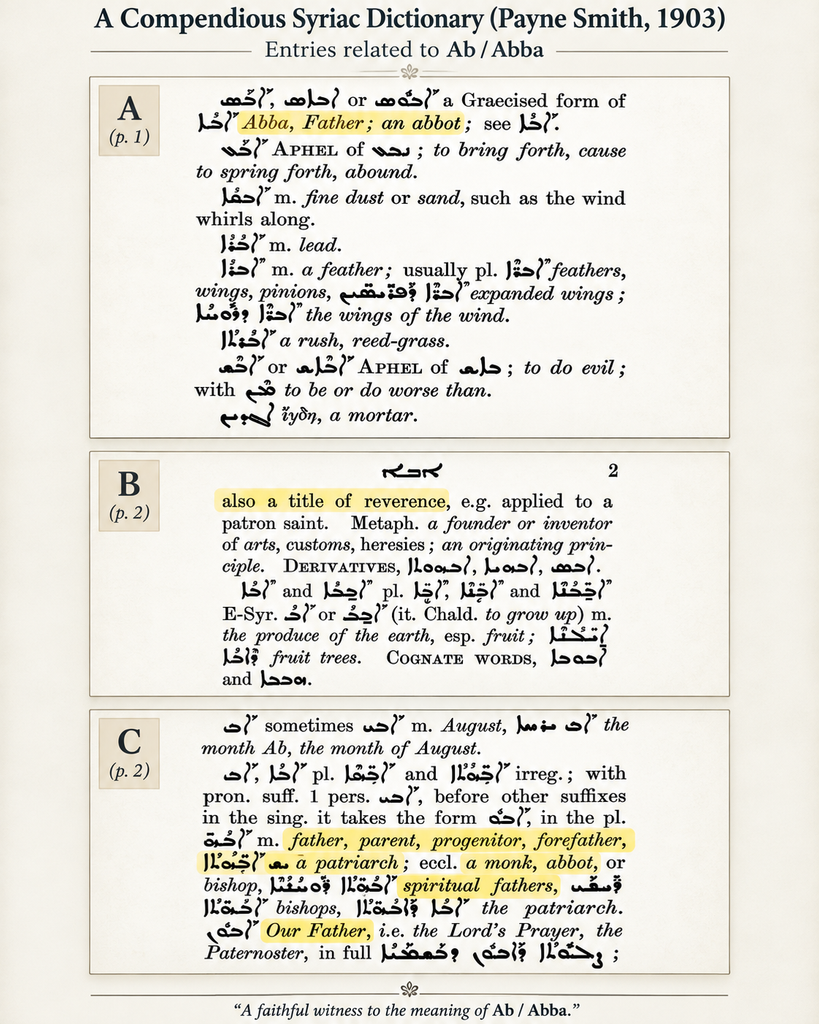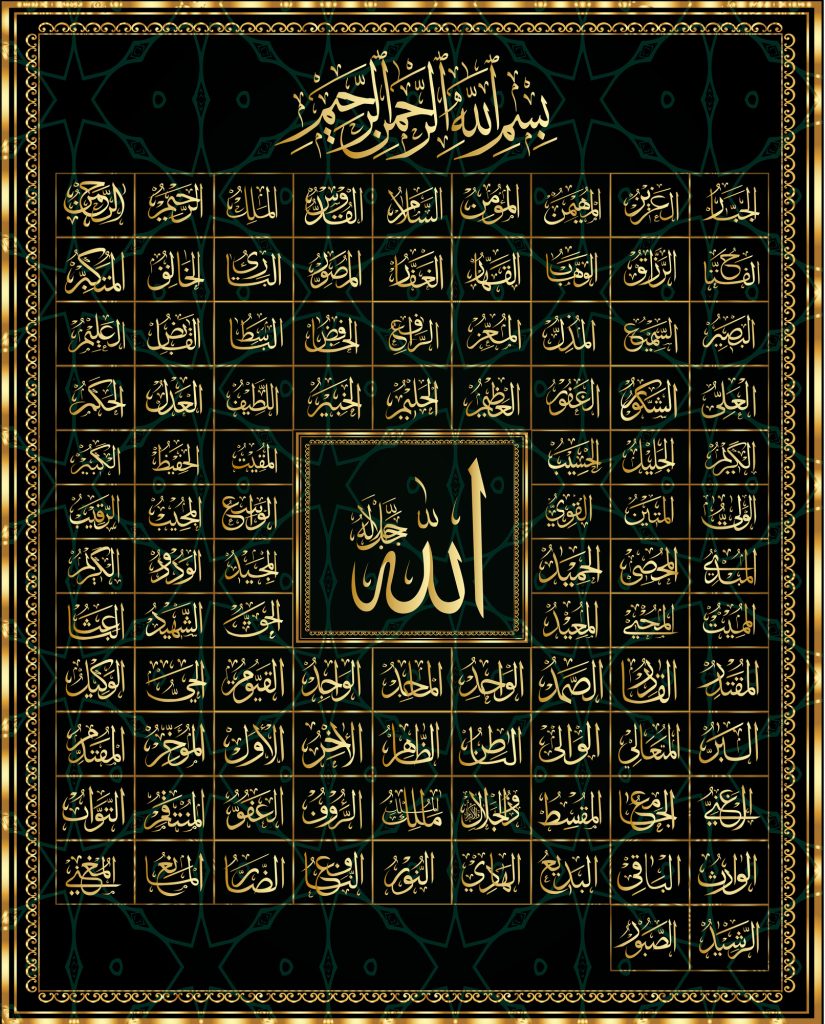
For many Muslims, the word Abba immediately sounds Christian.
“Father.”
And because the Qur’an emphatically rejects the idea that God begets children, Muslims instinctively recoil from the term.
But that reaction is based on an English assumption, not on the older Semitic language.
The question is not whether Muslims should call God a biological father. They should not.
The question is what Abba actually meant in the language Jesus spoke.
Alāhā Is “God.” Abba Also Means God.
In Syriac and other Aramaic, the ordinary noun for God is ܐܠܗܐ — Alāhā, cognate with Arabic ilāh and Allāh.
Then there is ܐܒ — Ab, “father,” and its emphatic form ܐܒܐ — Abba, “the Father.”
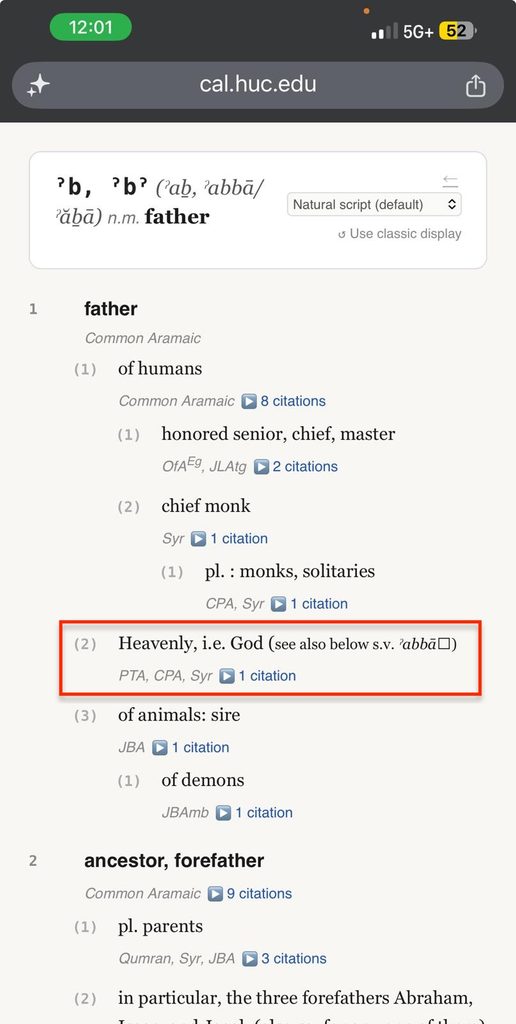
Open the Comprehensive Aramaic Lexicon at that entry and the meanings are listed: father; honored senior, chief, master; and — sense (2) under the human uses — “Heavenly, i.e. God,” attested in Palestinian Targumic, Christian Palestinian and Syriac.
See: https://cal.huc.edu/cal_entry_web.php?lemma=%29b+N
and: https://cal.huc.edu/JLAentry.php?cits=no&lemma=%29b+N&utm_source=chatgpt.com
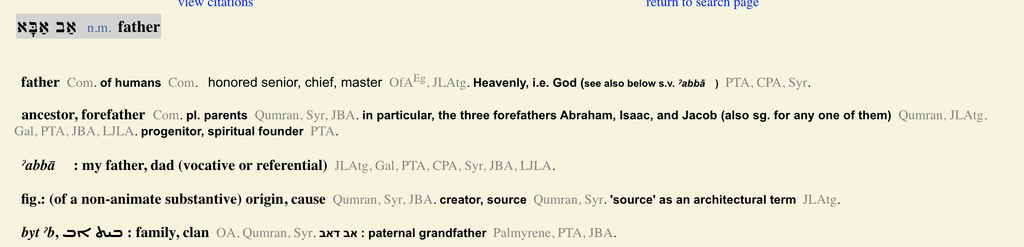
Not a metaphor. Not a later Christian extension. A listed meaning of the word — the way an English dictionary gives “a powerful ruler” as a sense of god. One word, several meanings; the sentence tells you which is in play.
That is the part English readers miss.
Two Sides of the Same Rejection: The Qur’an Rejects Divine Offspring; Jesus Rejects Divine Titles for Men
In its original sense, ab means “father” and can denote a begetter. The Qur’an rejects precisely that offspring category — abnāʾ Allāh in 5:18, ibn Allāh in 9:30, and walad in 112:3 — and its answer is creaturehood: “you are human beings among those He created.” It does not frame the objection as a ban on the father-word itself. Aramaic Abba, by contrast, also functioned as a title of honor and authority — borne by sages such as Abba Saul and used in divine address — without itself meaning “begetter.” Matthew 23:9 sits inside a list of exactly such titles: Rabbi, Father, Guide. The context fixes the sense: the “Father” Jesus forbids is Abba as a religious title, not ab as an ordinary parent — just as the “Rabbi” of 23:8 is a title, not merely the adjective “great.” “Call no man on earth your Abba, for one is your Abba in heaven.” So the Qur’an rejects divine offspring; Jesus reserves the divine title. They reject the same confusion from opposite ends — turning a man into God’s son, and giving a man a honorific title reserved for God.
The Jews Said It First
This is not a Christian usage that Muslims must import.
In the Talmud (b. Taʿanit 23b), during a drought the rabbis send schoolchildren to Ḥanan ha-Neḥba, grandson of Ḥoni the circle-drawer. The children tug his cloak and cry, “Abba, Abba, give us rain.” He prays: “Master of the Universe, do it for the sake of these who cannot tell the difference between the Abba who gives rain and the Abba who does not.”
God is Abba. A man is Abba. The whole story turns on one word carrying both.
And “Father in heaven” is a synagogue formula before it is a Gospel one. The Mishnah: “On whom shall we rely? On our Father in heaven” (Soṭah 9:15). “Do the will of your Father in heaven” (Avot 5:20). Akiva: “Before whom do you purify yourselves? Before your Father in heaven” (Yoma 8:9). Avinu Malkeinu — “our Father, our King” — is still sung on Yom Kippur.
When Jesus said “one is your Father in heaven,” he was quoting the synagogue.
Jesus Did Not Ban the Word “Father”
Matthew records: “Call no man your father on earth, for you have one Father, who is in heaven” (23:9).
Taken woodenly in English, that is absurd. “Honor your father and mother.” “Your father Abraham.” Jesus knew people had fathers.
Read the paragraph. Jesus is attacking religious titles: Rabbi (v. 8), Father (v. 9), Master / Guide (v. 10). The structure is:
Rabbi → Abba → Master.
The Syriac Christians’ own Bible, the Peshitta, reads the verse with the same word both times: call no one Abba on earth, for one is your Abba in heaven. Nothing was flattened for them. The Greek patēr and the English father did the flattening.
The point is authority: do not give a man a spiritual father-title that, in heavenly usage, designates God.
Doesn’t Islam Reject Calling God “Father”?
Islam rejects something specific: God does not beget.
“He neither begets nor is begotten” (112:3). “How could He have a son when He has no consort?” (6:101). “It is not for God to take a son” (19:35).
Read those verses again. Every one of them targets walad — offspring, begetting. Not one targets the word ab. Arabic-speaking Christians have prayed Abānā alladhī fī s-samāwāt, “Our Father who is in heaven,” since before Islam. The Qur’an rejects divine procreation; it never formulates its objection as a ban on the Semitic father-word itself.
And when the Qur’an answers the claim “we are the children of God and His beloved,” it says: “Rather, you are human beings among those He created” (5:18).
That is the Bible’s own definition. “Is he not your Father who created you, who made you and established you?” (Deut 32:6). “Have we not all one Father? Has not one God created us?” (Mal 2:10). “You are our Father; we are the clay, you the potter” (Isa 64:8).
The Bible’s Father is the Potter. The Qur’an’s Rabb is the Potter. The gap between them is an English word.
The Qur’an Itself Uses Father-Language Without Biology
“The religion of your father Abraham” (22:78) — addressed to every Muslim, none of whom descends from him. The Prophet’s wives are the believers’ “mothers” (33:6). A hadith calls creation ʿiyāl Allāh, God’s household and dependents, and says the most beloved to Him is the most useful to His dependents.
Relational kinship words, sanctioned by revelation, explicitly not genealogy. The concept is already Islamic; only the Aramaic word is unfamiliar.
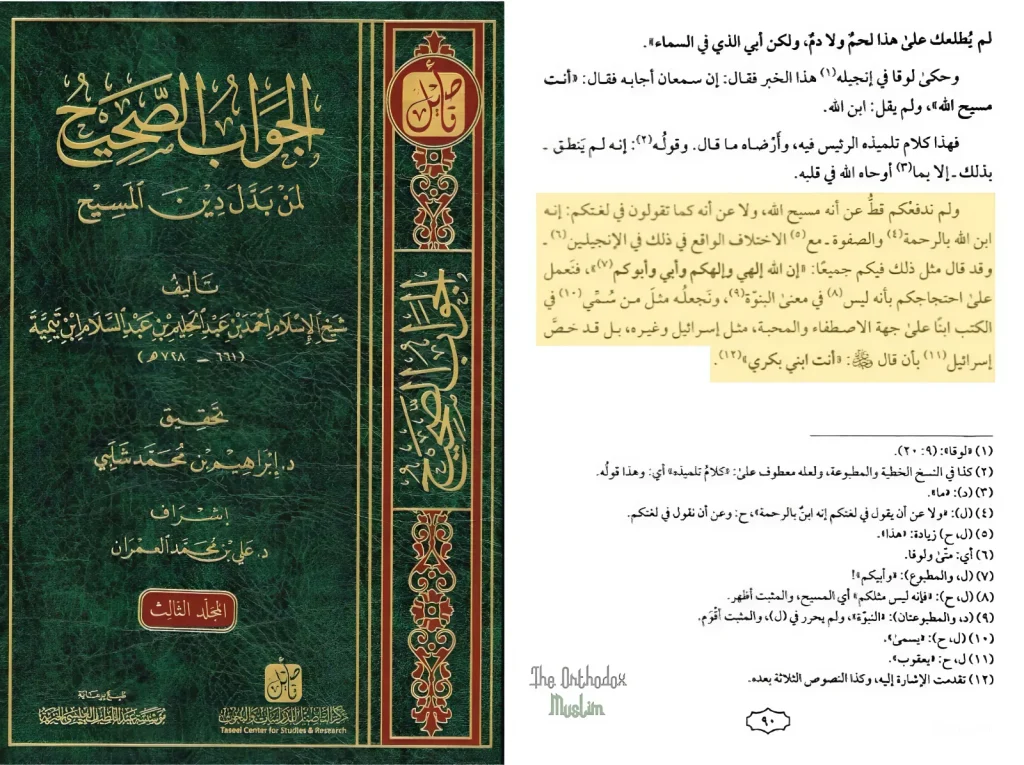
Translation:
“We do not dispute with you regarding the fact that he is the Messiah of Allah. Nor do we dispute with you in what you say about him in your language — that he is the son of Allah in the sense of mercy and closeness” (Al Jawab Al Sahih, Volume 3, pg.90)
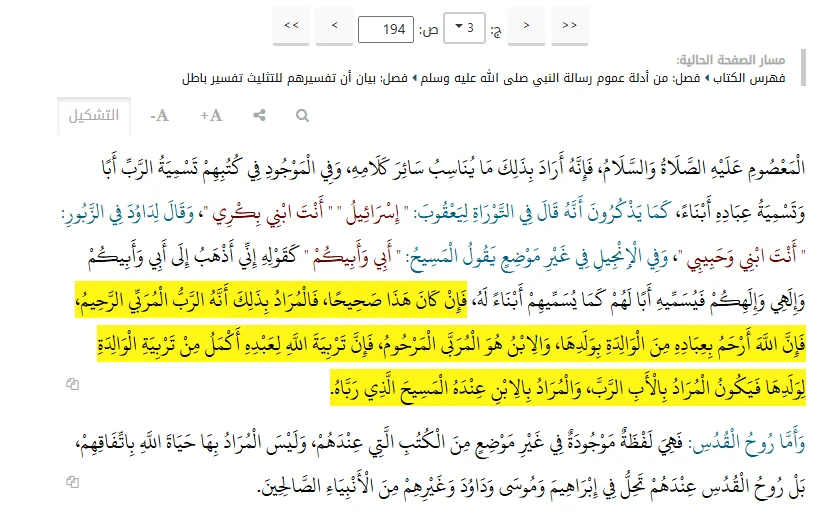
Translation:
“If this statement attributed to the Messiah — the infallible one (peace be upon him) — is authentic, then he must have meant by it something that aligns with the rest of his speech. In the existing texts of their books, we find that God is called ‘Father’ and His servants are called ‘sons.’ For example, they mention that He said in the Torah to Jacob: ‘Israel, you are My firstborn son,’ and He said to David in the Psalms: ‘You are My son, My beloved.’ And in multiple places in the Gospel, the Messiah says: ‘My Father and your Father,’ such as when he says: ‘I am ascending to My Father and your Father, and to My God and your God.’ So, he refers to God as ‘Father’ to them just as he calls them ‘sons’ to Him. If this is accurate, then what is meant by it is that He (God) is the nurturing, merciful Lord — for Allah is more merciful to His servants than a mother is to her child — and the ‘son’ is the one being nurtured and shown mercy. Indeed, God’s nurturing of His servant is more perfect than the nurturing of a mother to her child. So, the intended meaning of ‘Father’ is ‘Lord,’ and the intended meaning of ‘son’ according to the Messiah is ‘the one nurtured by Him.’” (Al-Jawāb al-Ṣaḥīḥ, vol. 3, pg. 193)
The Remaining Objection
Many Muslim theologians hold that God’s names are tawqīfī — fixed by revelation. On that view, even a word that linguistically means God is not adopted as a devotional name unless revelation gives it.
That objection is real. So there are two questions:
Does Abba, in Aramaic, mean God? Yes — the dictionaries list it.
Should Muslims adopt Abba as a devotional name for Allah? That is a separate question of Islamic theology, and mainstream answers are cautious.
Confusing the two has kept the linguistic question from ever being discussed.
The Bigger Problem
Return to Matthew 23. Rabbi. Abba. Master. “You are all brothers.” One Father in heaven.
Then Paul: “Though you have ten thousand guardians in Christ, you do not have many fathers; for in Christ Jesus I became your father through the gospel” (1 Cor 4:15).
If Jesus forbade elevating a man to the position of Abba, Paul adopted exactly that language — and the Church institutionalized it. To this day Catholic and Orthodox clergy are addressed as Father.
The deeper problem was never Muslims refusing to call God Abba.
It is Christians calling men Abba.
A Suggestion
Bibles already print LORD for the divine name and Lord for a man. They should do the same here: ABBA where the word means God, abba where it means a man.
Then Matthew 23:9 would read as Jesus said it: Call no man abba on earth, for one is your ABBA, in heaven.
The Point
Alāhā = God. Ab = father. Abba = “the Father” — one of whose dictionary meanings is God.
Abba does not mean that God fathered anyone. That meaning is imposed only when “Father” is read as biology.
The Qur’an rejects divine begetting. It does not change the Aramaic language.
Can a Muslim understand Abba as referring to Allah? Yes — the dictionaries say so, and the rabbis said so.
Can a Muslim mean by it that Allah begot a son? Never.
The word was never the problem. What people mean by it is.
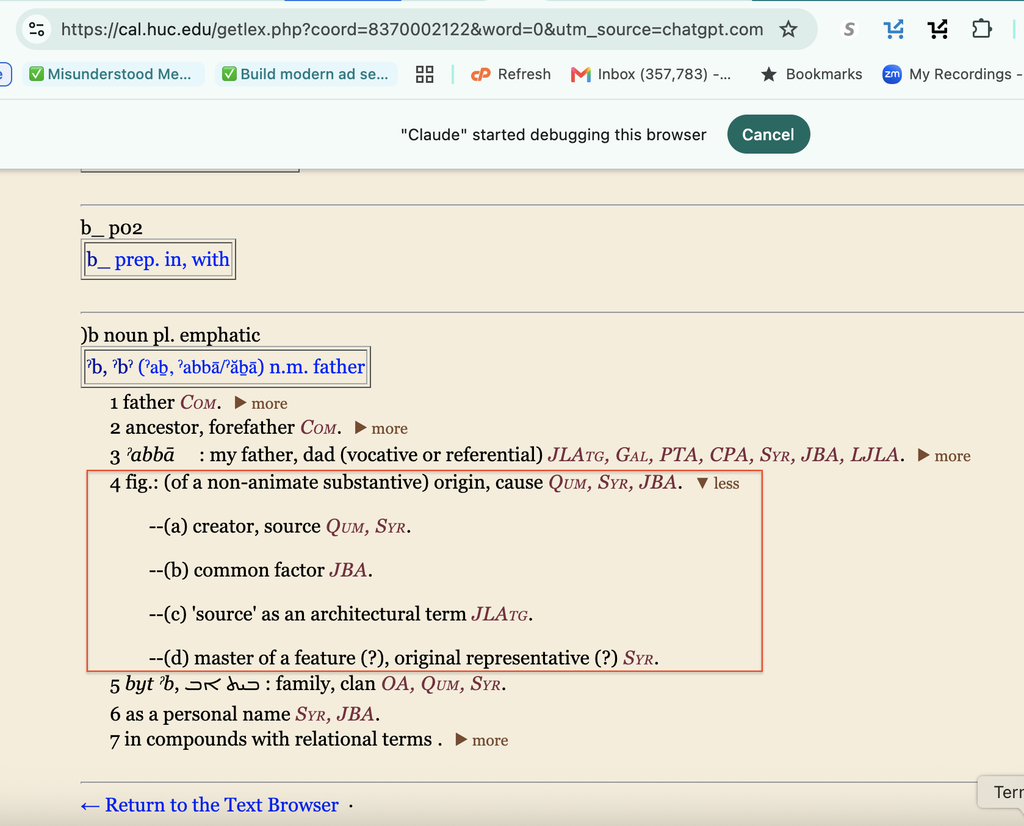
https://cal.huc.edu/getlex.php?coord=8370002122&word=0&utm_source=chatgpt.com